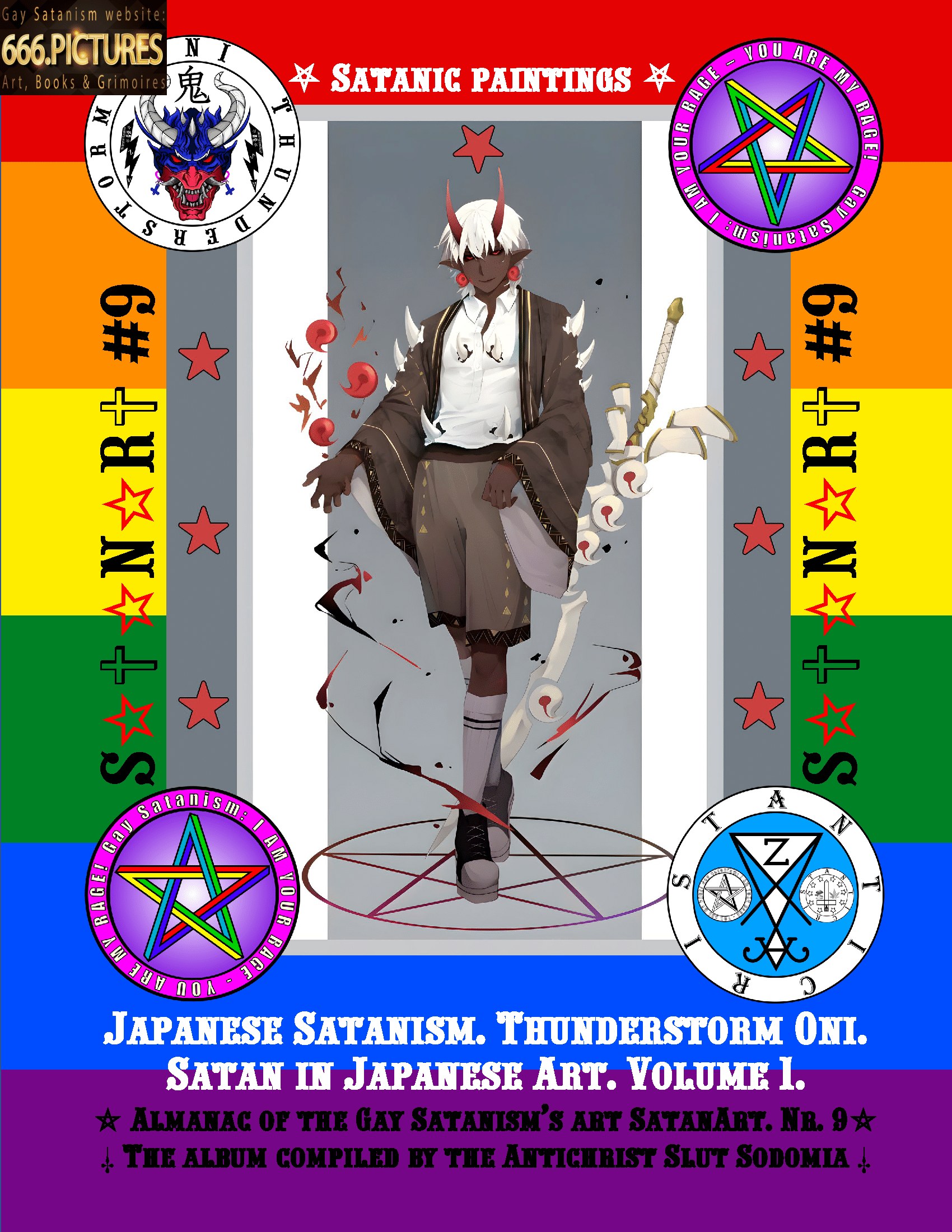
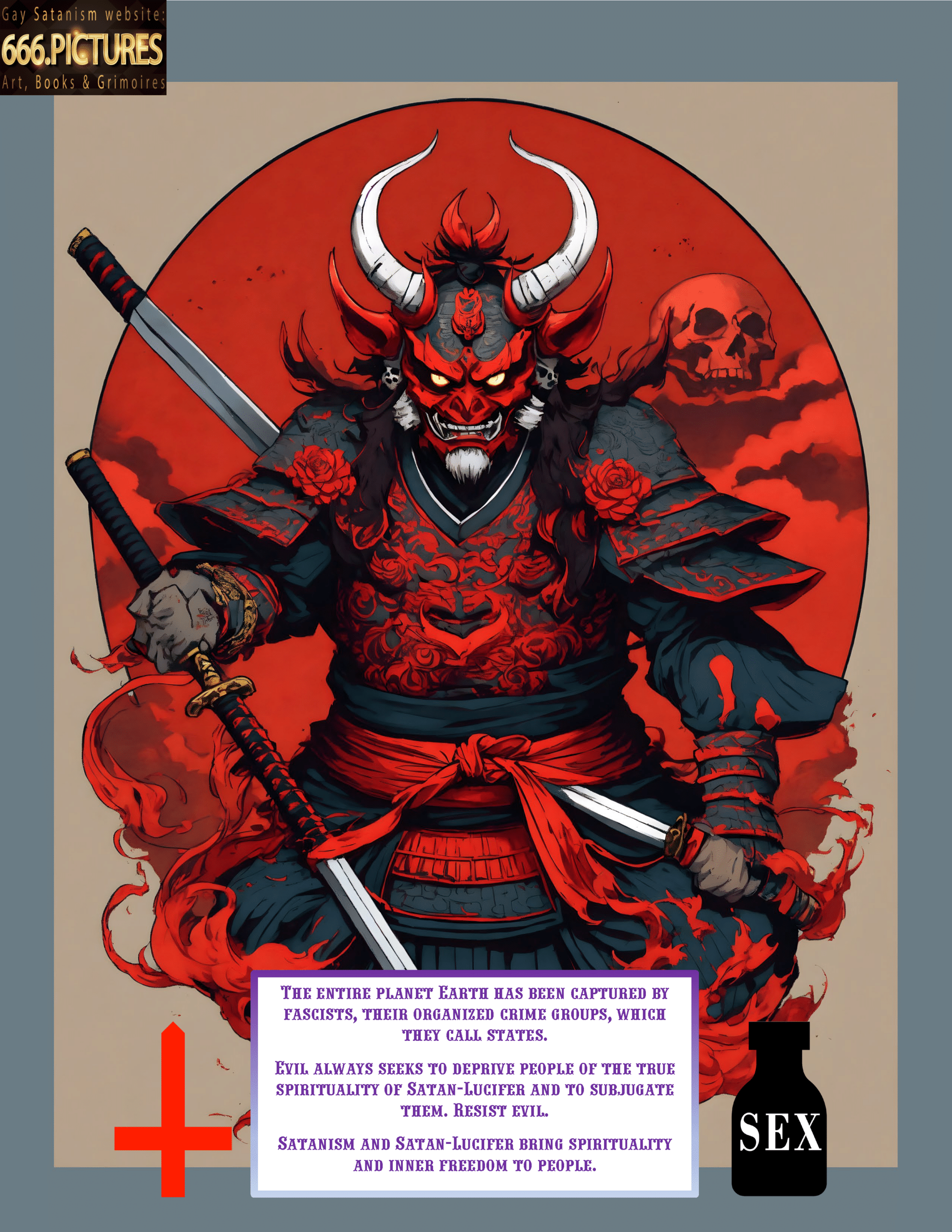
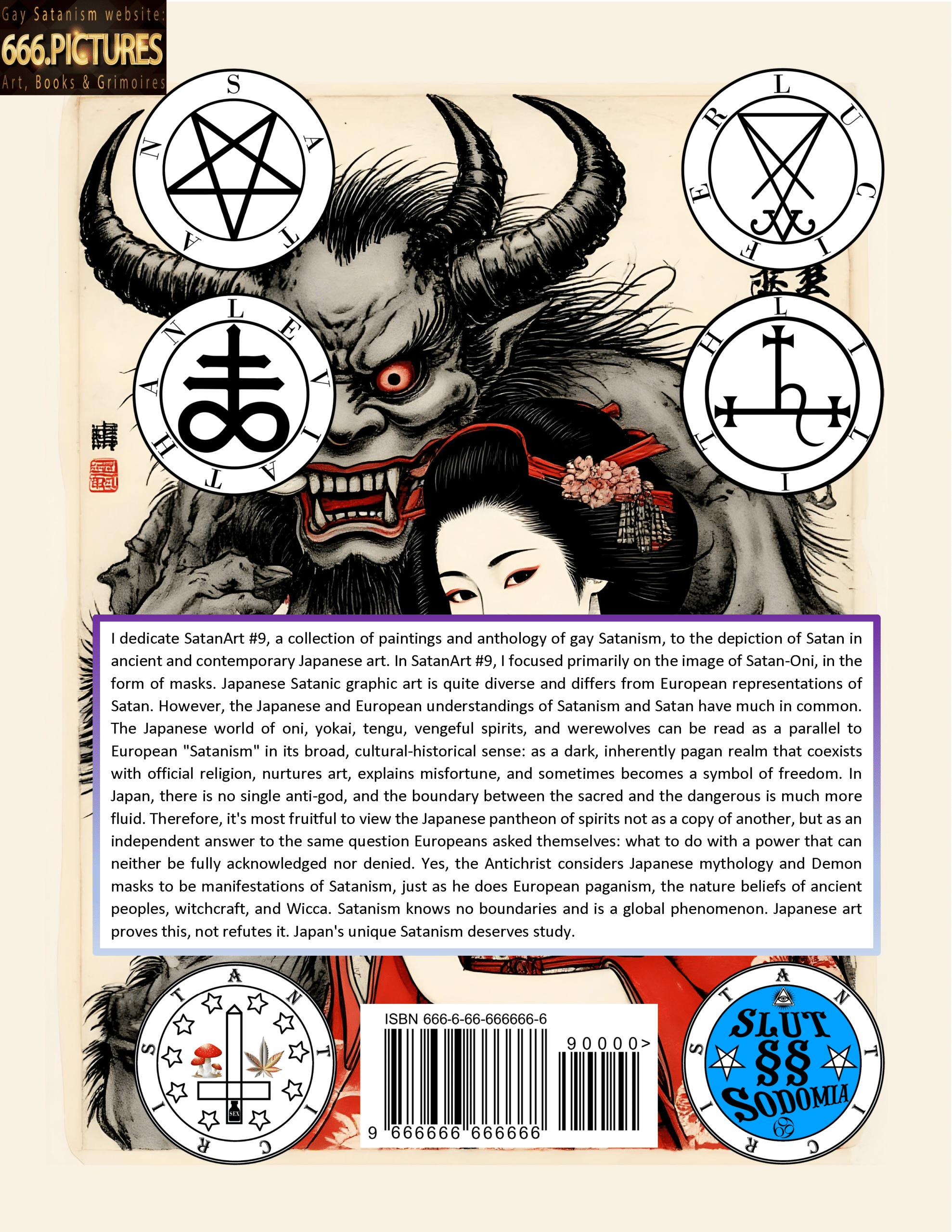
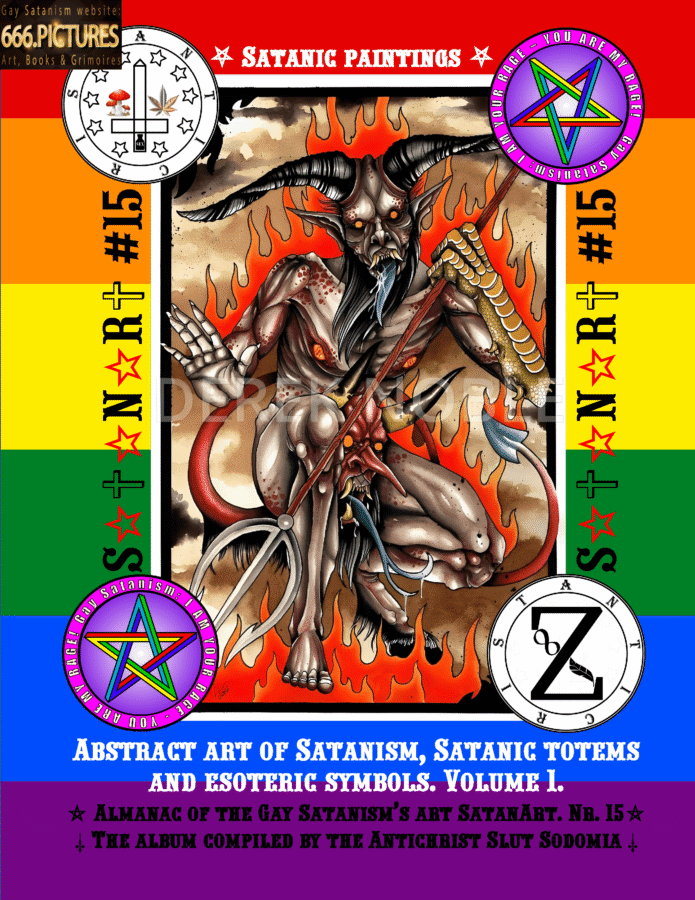
Almanac of the Gay Satanism’s art SatanArt. Nr. 9: Japanese Satanism. Thunderstorm Oni. Satan in Japanese Art. Volume 1. Puritan edition. PDF high quality e-Book. Revised and improved Enhanced Edition V1.1.
$10.00
The theme of the album-collection SatanArt №9 is Japanese Satanism, Satan in Japanese art and Oni masks. They, one of the visual embodiments of Satan in Japanese folklore. Collections of satanic drawings, photographs and other graphics of gay Satanism (No. 801-900) for immersion in spiritualization by Satan. Collection SatanArt No. 9. Addition to the grimoire “Gay Lust”. Online Satanic LGBTQ magazine SatanArt and community platform covering Gay-Satanism, politics, culture, health, sex and relationships. The e-book from the Antichrist. Gospel of Satan-Lucifer for Gay Satanism. A modern digital publication of Gay Satanism focused on satanic spirituality, queer culture, esoteric, mystique art of Japan.
Description
The almanac of Satanic Drawings, Photos and Other Gay Satanism Graphics (#801-900) for the immersion in the spirituality of Satan. S☆✞☆N☆R✞ #9. Japanese Satanism. Thunderstorm Oni. Satan in Japanese Art. Volume 1. Puritan Edition. Supplement to the Grimoire “Gay Lust”. Revised and improved book’s edition. License: CC BY-ND 4.0.
The album is compiled by a Satanist, the Fagot Slut of His Majesty Satan Sodomia ⚣ aka the Antichrist Slut Sodomia. 2026. English version. Collection for 2021-2026. The Book of Gay Satanism Art. Document version V 1.1.
This issue of the Antichrist’s LGBTQ+ Satanism almanac is the Supplemented and Enhanced Edition V1.1, which replaces the outdated version 1.0 of SatanArt #9. The textual description of Japanese Satanism and the quality of the illustrations have been significantly improved.
Changes in version V1.1 of SatanArt almanac #9, “Japanese Satanism. Thunderstorm Oni. Satan in Japanese Art. Volume 1”: I replaced three drawings in the main part of the album with more interesting, high-quality, and meaningful ones. Here are their numbers: #817, 858, 892. Many drawings from all issues of SatanArt in version V1.1 have been graphically improved. Some images have had their AI processing replaced, and some have had additional AI processing performed to improve their print and aesthetic quality.
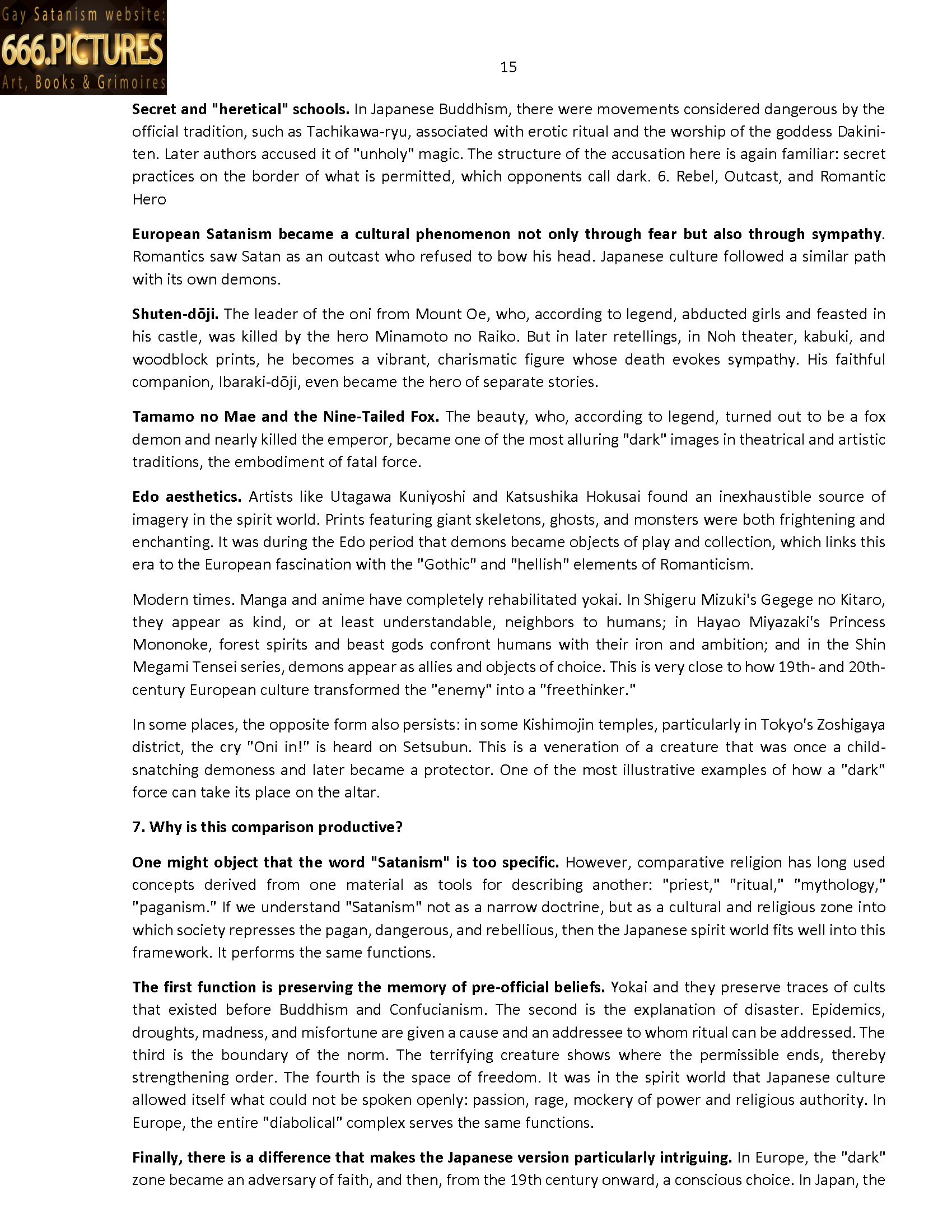
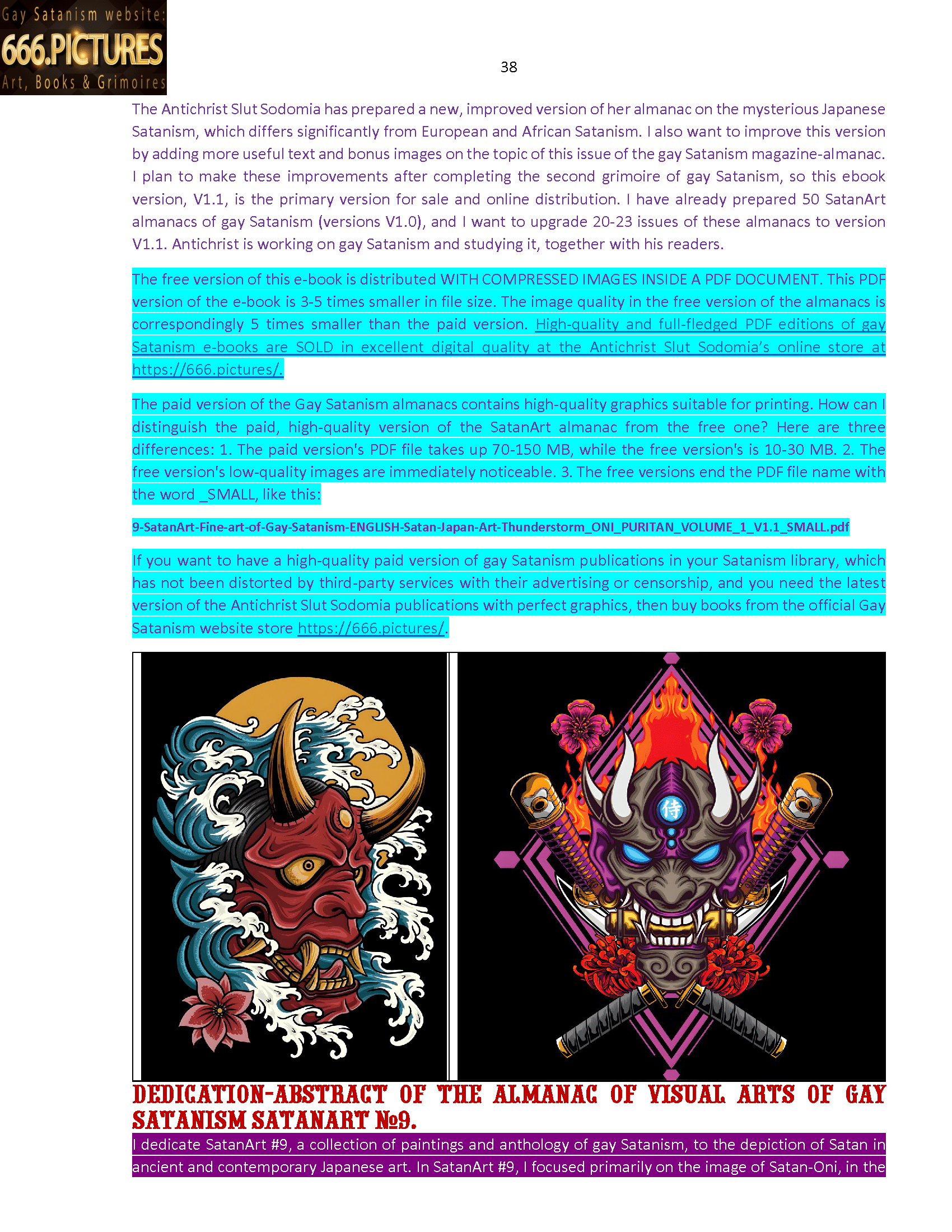
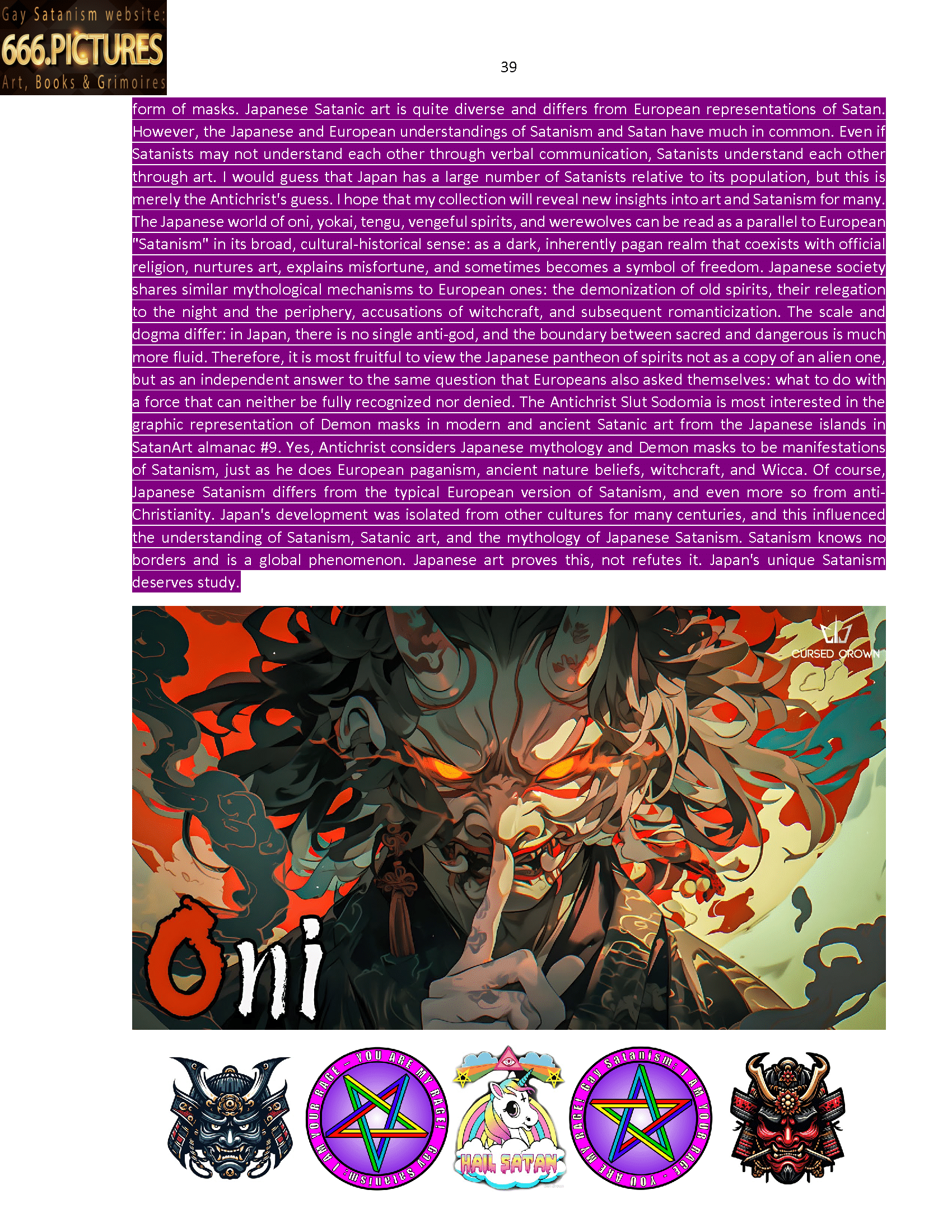
I dedicate SatanArt #9, a collection of paintings and anthology of gay Satanism, to the depiction of Satan in ancient and contemporary Japanese art. In SatanArt #9, I focused primarily on the image of Satan-Oni, in the form of masks. Japanese Satanic art is quite diverse and differs from European representations of Satan. However, the Japanese and European understandings of Satanism and Satan have much in common. Even if Satanists may not understand each other through verbal communication, Satanists understand each other through art. I would guess that Japan has a large number of Satanists relative to its population, but this is merely the Antichrist’s guess. I hope that my collection will reveal new insights into art and Satanism for many. The Japanese world of oni, yokai, tengu, vengeful spirits, and werewolves can be read as a parallel to European “Satanism” in its broad, cultural-historical sense: as a dark, inherently pagan realm that coexists with official religion, nurtures art, explains misfortune, and sometimes becomes a symbol of freedom. Japanese society shares similar mythological mechanisms to European ones: the demonization of old spirits, their relegation to the night and the periphery, accusations of witchcraft, and subsequent romanization. The scale and dogma differ: in Japan, there is no single anti-god, and the boundary between sacred and dangerous is much more fluid. Therefore, it is most fruitful to view the Japanese pantheon of spirits not as a copy of an alien one, but as an independent answer to the same question that Europeans also asked themselves: what to do with a force that can neither be fully recognized nor denied. The Antichrist Slut Sodomia is most interested in the graphic representation of Demon masks in modern and ancient Satanic art from the Japanese islands in SatanArt almanac #9. Yes, Antichrist considers Japanese mythology and Demon masks to be manifestations of Satanism, just as he does European paganism, ancient nature beliefs, witchcraft, and Wicca. Of course, Japanese Satanism differs from the typical European version of Satanism, and even more so from anti-Christianity. Japan’s development was isolated from other cultures for many centuries, and this influenced the understanding of Satanism, Satanic art, and the mythology of Japanese Satanism. Satanism knows no borders and is a global phenomenon. Japanese art proves this, not refutes it. Japan’s unique Satanism deserves study.
 SatanArt, the Antichrist’s visual art journal of Satanism, is richly illustrated and helps budding Satanists become inspired by Satan-Lucifer. The Antichrist is offering a free version of SatanArt. Nr. 9: Japanese Satanism. Thunderstorm Oni. Satan in Japanese Art. Volume #1, Revised and improved Enhanced Edition V1.1 to the community of satanic people around the world on a publicly accessible basis. Although the image quality in the free version is significantly lower than in the full-fledged original, it is a fully functional, modern e-book in PDF format. This publication option will allow people of all income levels to become familiar with gay Satanism.
The free PDF e-book version from the Antichrist Slut Sodomia is distributed with compressed images within the PDF document. Free PDF version of an e-book is 3-10 times smaller in file size (in bytes). The image quality in the free version of the almanacs is correspondingly 3-10 times lower than that of the paid version.
Online Satanic LGBTQ magazine SatanArt and community platform covering Gay-Satanism, politics, culture, health, sex and relationships. The e-book from the Antichrist. Gospel of Satan-Lucifer for Gay Satanism.

A study of the symbolism of Japanese satanic art. The uniqueness of Japanese symbolism lies in its depth and ambiguity. Each symbol is historically developed and has its own unique history. Furthermore, Japanese symbolism is closely linked to Japanese mythology and religion.
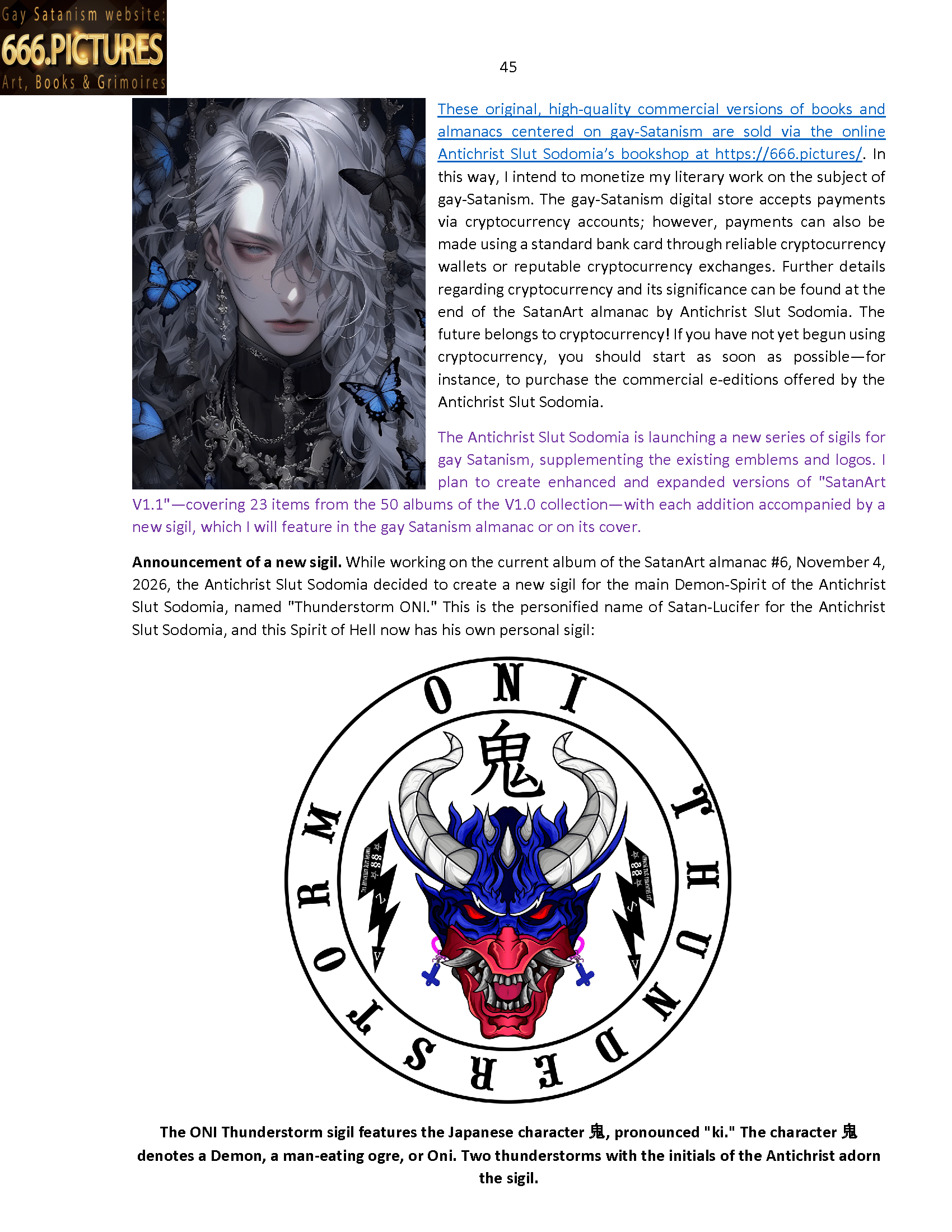
The name of Satan, which our Teacher says to the Antichrist Slut Sodomia sounds like Гроза Они (translation from Russian: Thunderstorm Oni). If you literally understand the Name of the Demon in Russian, then this name can be deciphered as: Thunderstorm for Them. I like this option and the name of the Demon means a threat to the critters of evil in our world and in Hell. Maybe other Satanists call Satan himself the same way… I don’t know for sure.
However, the name of Satan sounds similar to me in English: Thunderstorm Oni. Therefore, perhaps we are talking about the Japanese incarnation of Satan, who is written in Latin as Oni. Probably, both options are correct, at least that’s how I feel.
I like Japanese satanic art and I like the spirituality of the Japanese. Of course, there are various shortcomings in Japanese society, but I consider the Japanese to be a people with very good spirituality and great potential for satanic spirituality. I consider the Japanese to be a white race of people, despite the fact that the Japanese are in Asia and do not look like white people. In spirituality, the Japanese are equal to or superior to the white race. Therefore, it is no coincidence that the Japanese often draw themselves as European white people. This is not an accident, but a pattern of spirituality. As the reader of the Grimoire of Slut Sodomia “Gay Lust” could already guess, the Antichrist Slut Sodomia is not Japanese, does not know the Japanese language and does not understand the hieroglyphs of Asian languages. Slut Sodomia is very well versed in satanic fine art, from the point of view of Satanism. Therefore, I will make a disclaimer: the album may contain drawings that are not related to Japan or were not drawn by Japanese people. I will give the names of the drawings myself.
This book is a study and analysis by the Antichrist Slut Sodomia, a specific area of gay Satanism. In the SatanArt gay Satanism almanacs, the Antichrist conducts a visual examination of artworks, paintings, drawings, and photographs by various authors, covering various topics of gay sex, Satanism, LGBTQ+, transgenderism, magic, symbolism, deviance, and revelations of the evil of our world. The SatanArt almanac is the Antichrist’s academic work on the study of sexology, spirituality, and the psychology of the egregore of gay Satanism. ⛧§§⛧ Read, watch, get excited, and immerse yourself in the world of gay Satanism!
The Japanese Spirit World as Japanese “Satanism”: A Shadow Analogy with European Paganism
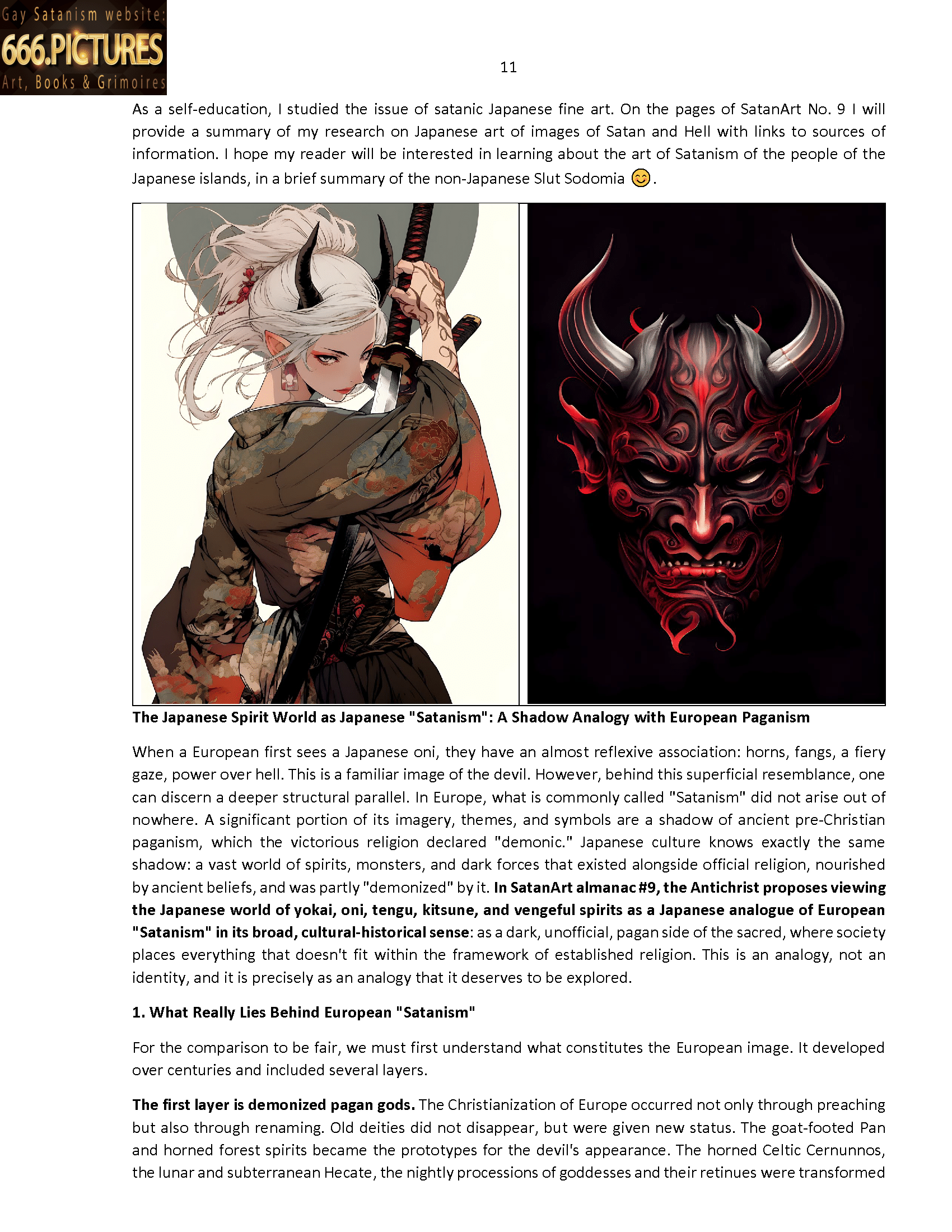
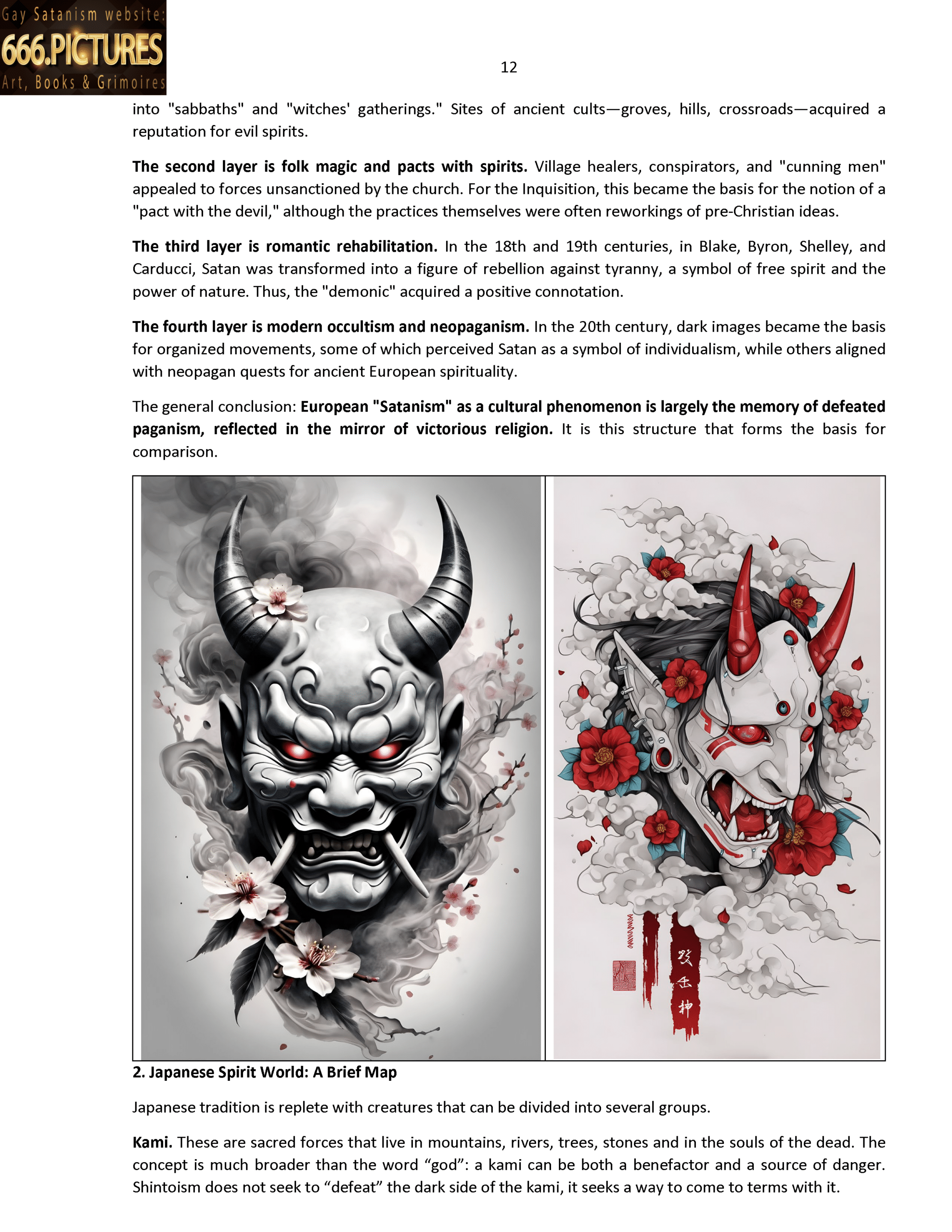
When a European first sees a Japanese oni, they have an almost reflexive association: horns, fangs, a fiery gaze, power over hell. This is a familiar image of the devil. However, behind this superficial resemblance, one can discern a deeper structural parallel. In Europe, what is commonly called “Satanism” did not arise out of nowhere. A significant portion of its imagery, themes, and symbols are a shadow of ancient pre-Christian paganism, which the victorious religion declared “demonic.” Japanese culture knows exactly the same shadow: a vast world of spirits, monsters, and dark forces that existed alongside official religion, nourished by ancient beliefs, and was partly “demonized” by it. In SatanArt almanac #9, the Antichrist proposes viewing the Japanese world of yokai, oni, tengu, kitsune, and vengeful spirits as a Japanese analogue of European “Satanism” in its broad, cultural-historical sense: as a dark, unofficial, pagan side of the sacred, where society places everything that doesn’t fit within the framework of established religion. This is an analogy, not an identity, and it is precisely as an analogy that it deserves to be explored.
- What Really Lies Behind European “Satanism”
For the comparison to be fair, we must first understand what constitutes the European image. It developed over centuries and included several layers.
The first layer is demonized pagan gods. The Christianization of Europe occurred not only through preaching but also through renaming. Old deities did not disappear, but were given new status. The goat-footed Pan and horned forest spirits became the prototypes for the devil’s appearance. The horned Celtic Cernunnos, the lunar and subterranean Hecate, the nightly processions of goddesses and their retinues were transformed into “sabbaths” and “witches’ gatherings.” Sites of ancient cults—groves, hills, crossroads—acquired a reputation for evil spirits.
The second layer is folk magic and pacts with spirits. Village healers, conspirators, and “cunning men” appealed to forces unsanctioned by the church. For the Inquisition, this became the basis for the notion of a “pact with the devil,” although the practices themselves were often reworkings of pre-Christian ideas.
The third layer is romantic rehabilitation. In the 18th and 19th centuries, in Blake, Byron, Shelley, and Carducci, Satan was transformed into a figure of rebellion against tyranny, a symbol of free spirit and the power of nature. Thus, the “demonic” acquired a positive connotation.
The fourth layer is modern occultism and neopaganism. In the 20th century, dark images became the basis for organized movements, some of which perceived Satan as a symbol of individualism, while others aligned with neopagan quests for ancient European spirituality.
The general conclusion: European “Satanism” as a cultural phenomenon is largely the memory of defeated paganism, reflected in the mirror of victorious religion. It is this structure that forms the basis for comparison.
I do not know the Japanese names of the characters in the paintings or the plots of the paintings. I just see that the painting relates to Satanism, I like it, it was drawn by a Satanist or contains Satanic ideas. You can criticize me for not understanding the intricacies of Japanese art or artistic folklore – this is true. In my album SatanArt №9 I present various examples of Japanese Satanic art and give the drawings my own names.
As a self-education, I studied the issue of Satanic Japanese fine art. On the pages of SatanArt №9 I will give a summary of my research on Japanese art of images of Satan and Hell with links to sources of information. I hope my reader will be interested to learn about the art of Satanism of the people of the Japanese islands, in a brief summary of non-Japanese Slut Sodomia 😊.
Satan in Japanese may not have a single meaning, but its elements and concepts permeate various areas of Japanese culture, from literature and folklore to media and art.
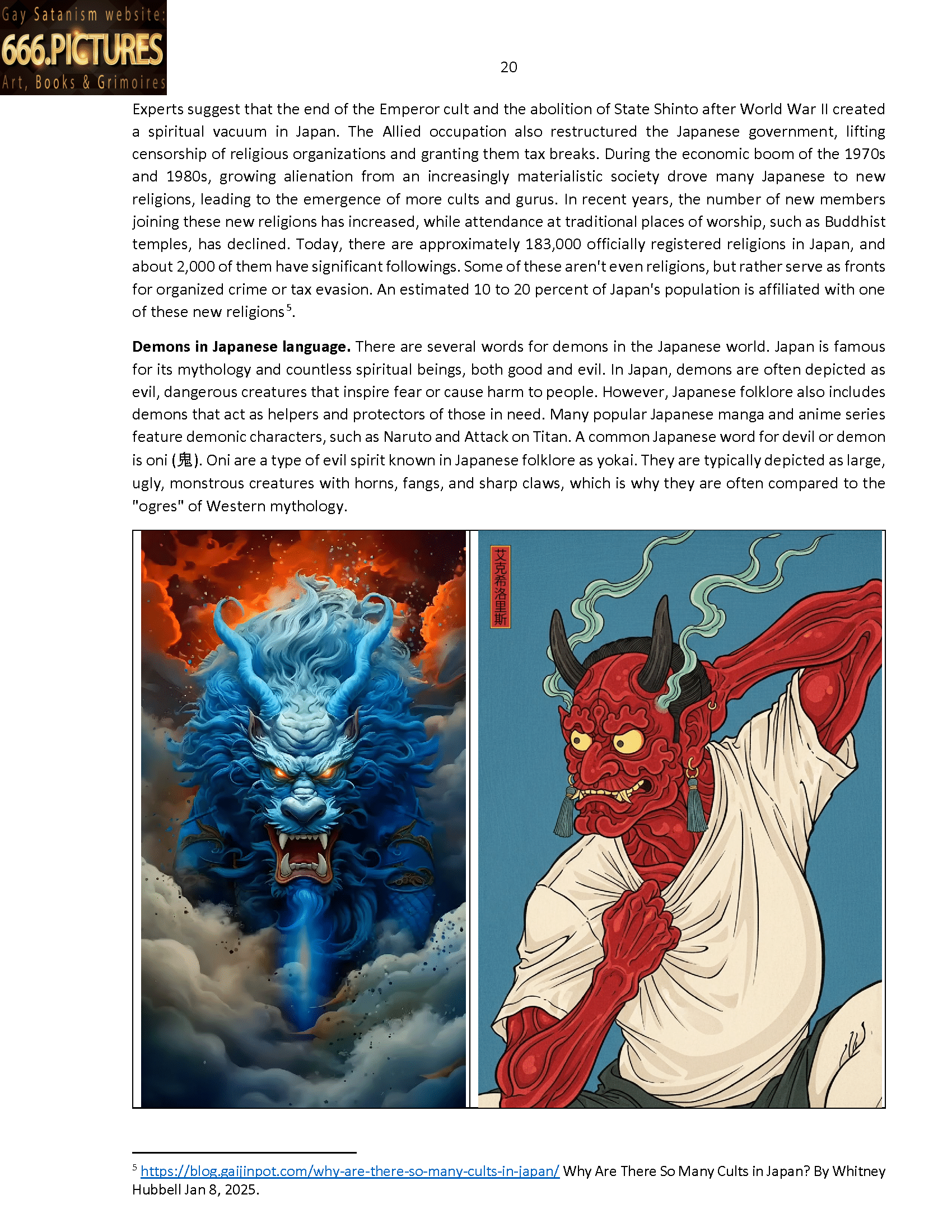
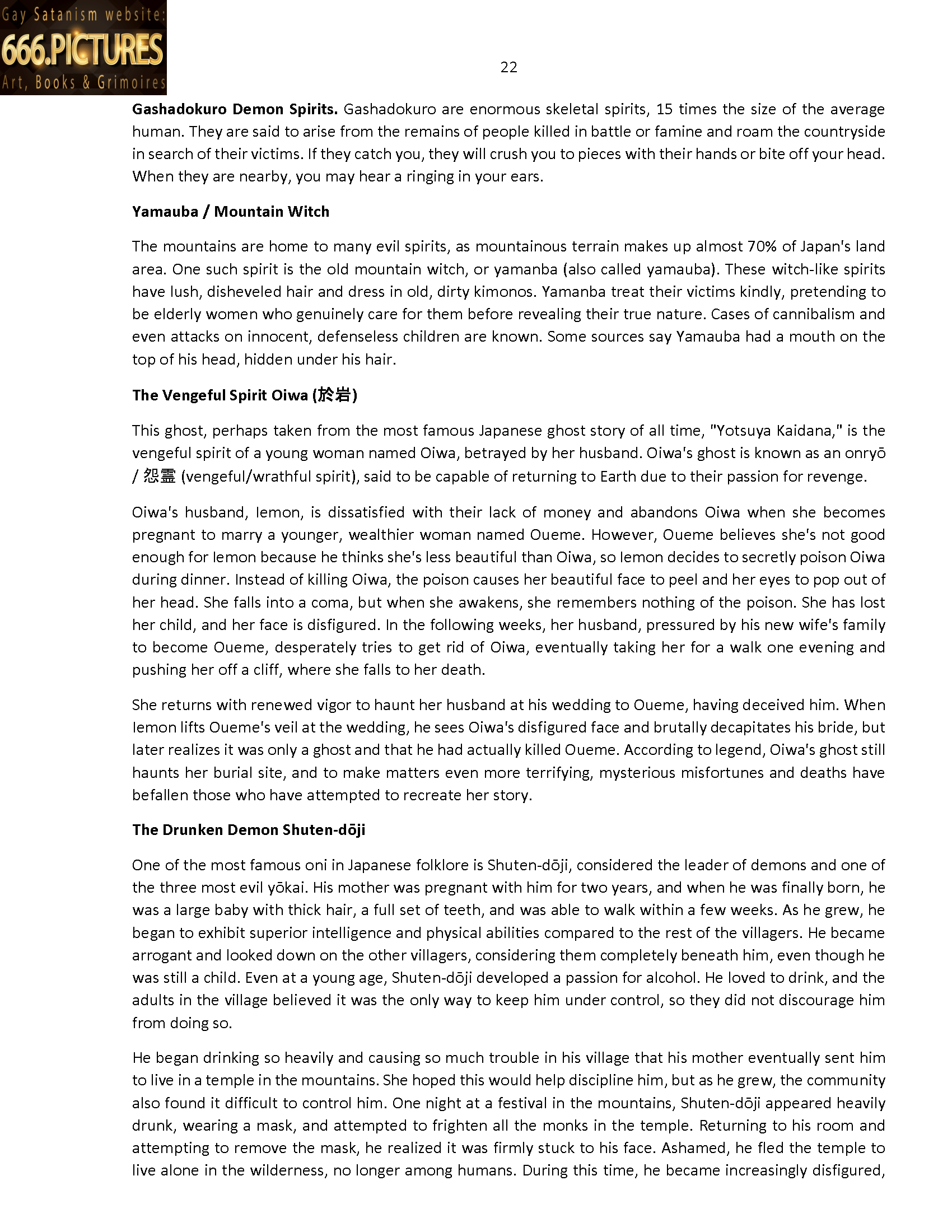
 Antichrist’s study of Japanese Satanic art. Satan-ONI, whose name translates as “hidden” or “invisible,” has its origins in Japanese folklore and Buddhism. In ancient times, they were considered the embodiment of evil, arising from sins and sinister energies. They are often depicted as the spirits of deceased people who committed crimes or harbored intense hatred in life. Enormous fangs and long horns add to their demonic appeal. Their weapon, the kanabo, a massive club covered in spikes, symbolizes their cruelty and ruthlessness.
Satan in Japanese is referred to as “赛坛纳” (Sātana). There is no exact equivalent for the term “Satan” in Japanese. However, elements and ideas related to the concept of Satan are present in Japanese culture.
The history of Satan in Japanese culture originates from religious beliefs, especially those associated with Buddhism and Shintoism. Although Satan in the Western tradition is usually associated with the devil and evil, in Japanese culture his image can be more complex and varied.
Satan in Japanese Literature: In some works of Japanese literature, you can find characters that resemble Satan in appearance or behavior. They are usually presented as evil and devious creatures who try to hinder the main characters and ruin their lives. Such characters may be winged demons, devils, or other entities that are inspired by the idea of Satan.
Christian Image of Satan in Japanese Culture: Japan has a Christian minority, so the ideas of Satan brought by Christianity may be found in some aspects of Japanese culture. For example, the image of Satan may be used in manga, anime, or video games, where the main villain is presented as a demonic being fighting against the hero or humanity in general.
Satan in Japanese Folklore: Satan as an entity or his attributes may also be used in Japanese folklore. Some myths and legends contain characters similar to Satan or having devilish characteristics. They may be associated with demons, seducers, or presented as guardians of hell. .
Origin of Satan in Japan: Satan first appeared in Japan during the Edo period (1603-1868), when Christianity was introduced to the country by Portuguese missionaries. The idea of an evil spirit or force was already present in Japanese folklore before this period, but it was not until the introduction of Christianity that the concept of a single entity known as “Satan” became more widely accepted.

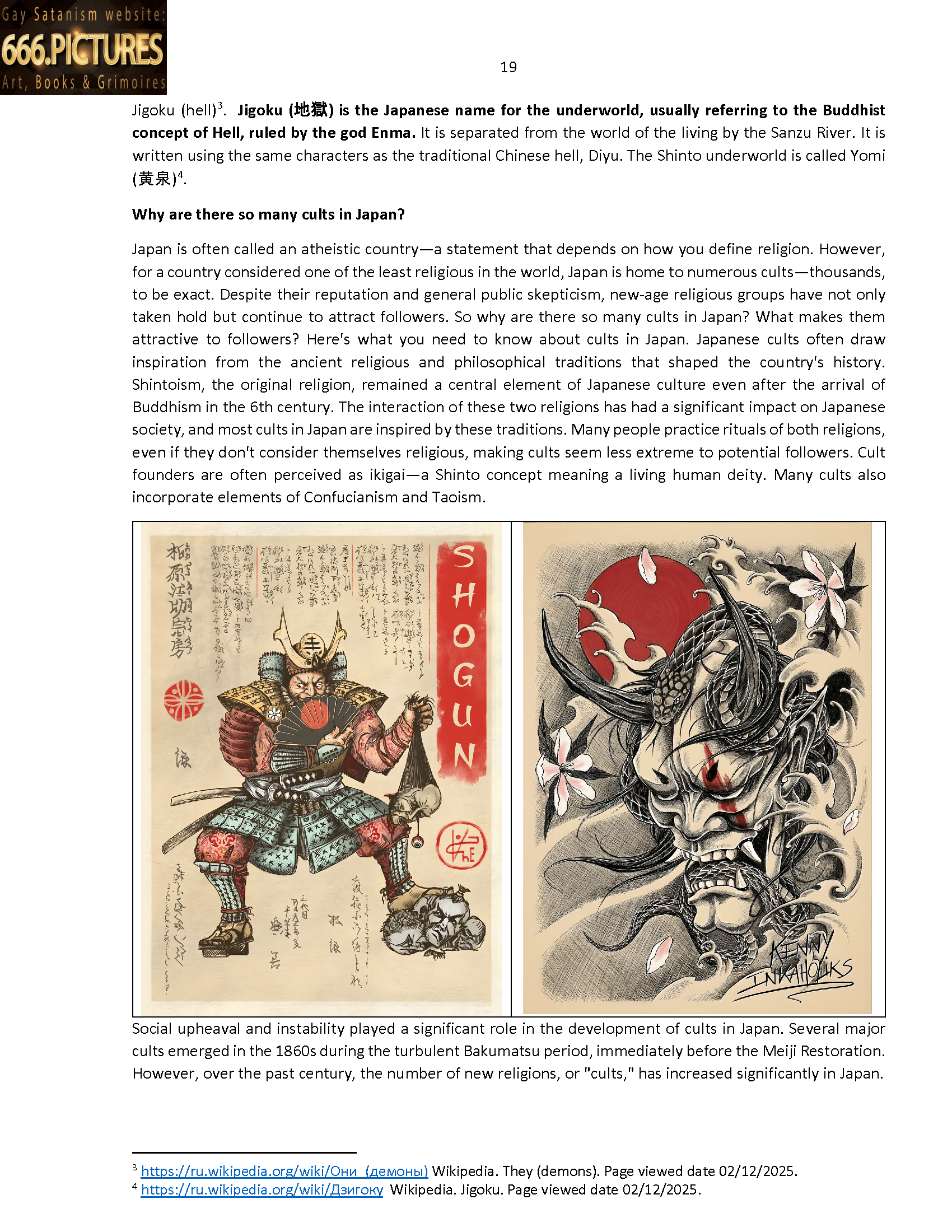
Demonic images have always been part of the Japanese artistic tradition, beginning in the Heian period. But it was during the Edo period (1603–1868) that they attained cult status. Artists such as Katsushika Hokusai depicted these creatures in woodblock prints and scrolls, adding details that emphasized their power and terror.
In traditional Japanese folklore, Satan was depicted as a powerful demon who had control over all other demons and spirits. He was believed to have great power over humans, causing them to commit immoral acts such as murder or theft. This version of Satan was often depicted with horns on his head, red skin, wings on his back, and a tail with spikes at the end. He could also take on different forms, such as the form of an animal or even a human.
Different Names for Satan in Japanese Culture: Throughout Japanese history, several different names have been used to refer to Satan. One of the most common names is Akuma (悪魔), which literally translates to “evil spirit”. Another popular name is Maou (魔王), which translates to “demon king”. Other names include Jashin (邪神), which means “evil god”, Shitori (執拗), which means “persistent”, Kyouma (凶魔), which means “evil demon”, and Oni (鬼), which means “ogre”. Other Names for the Devil in Japan: In addition to those mentioned above, there are several other names used to refer to the Devil in Japan today: Enma Daiou (閻魔大王), which literally translates to “Great King Yama”; Jigoku no Daiou (地獄の大王), which literally translates to “Great King of Hell”; Kyouaku no Daiō (凶悪の大王), meaning “Great King of Evil”; Shinigami Daiō (死神大王), meaning “Great King of Death”; Yomigeru Oni (蘇る鬼), meaning “Resurrection Ogre”; Onikiri Daiō (鬼切り大王), meaning “Great King Who Slays Demons”; and Kurayami no Kami (暗闇の神), meaning “God of Darkness” .
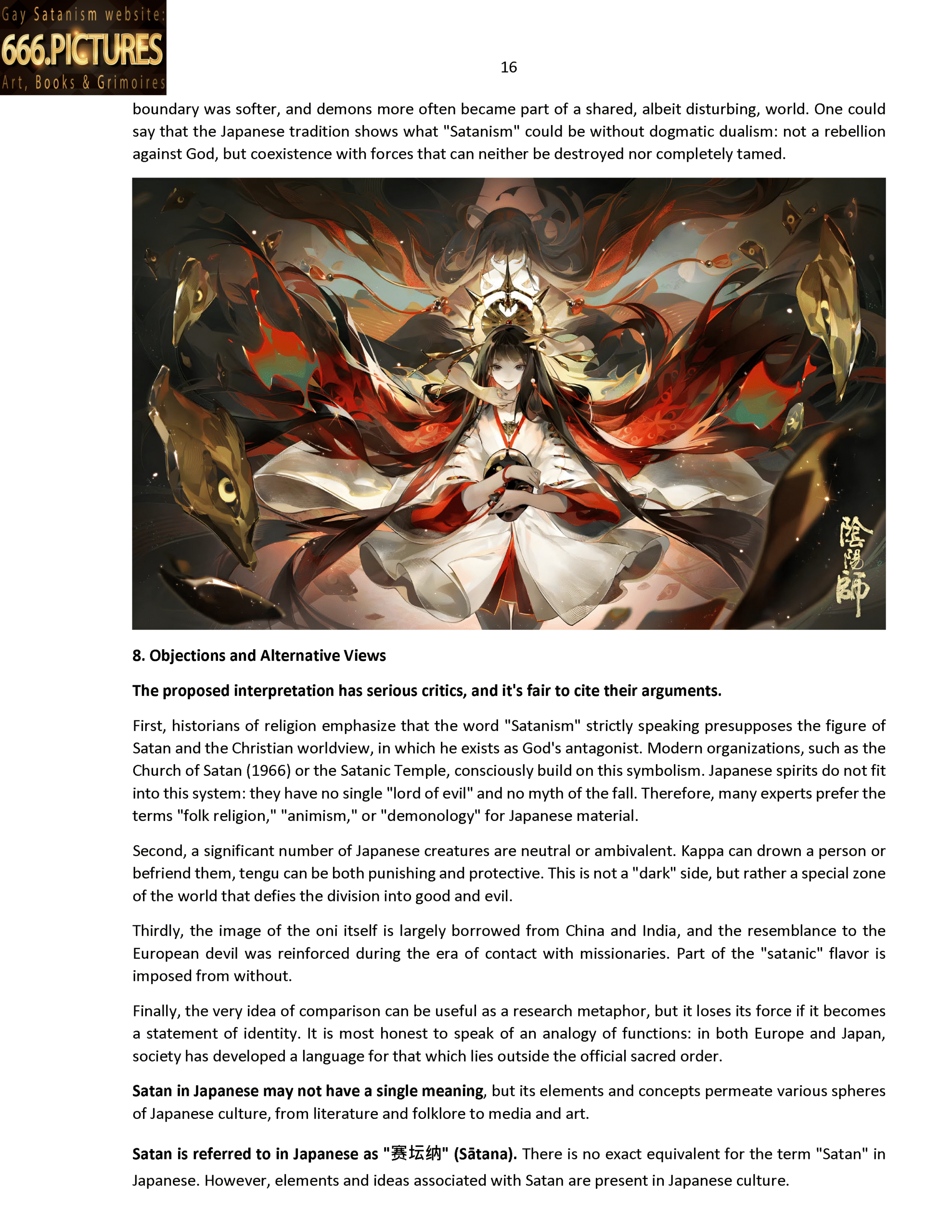
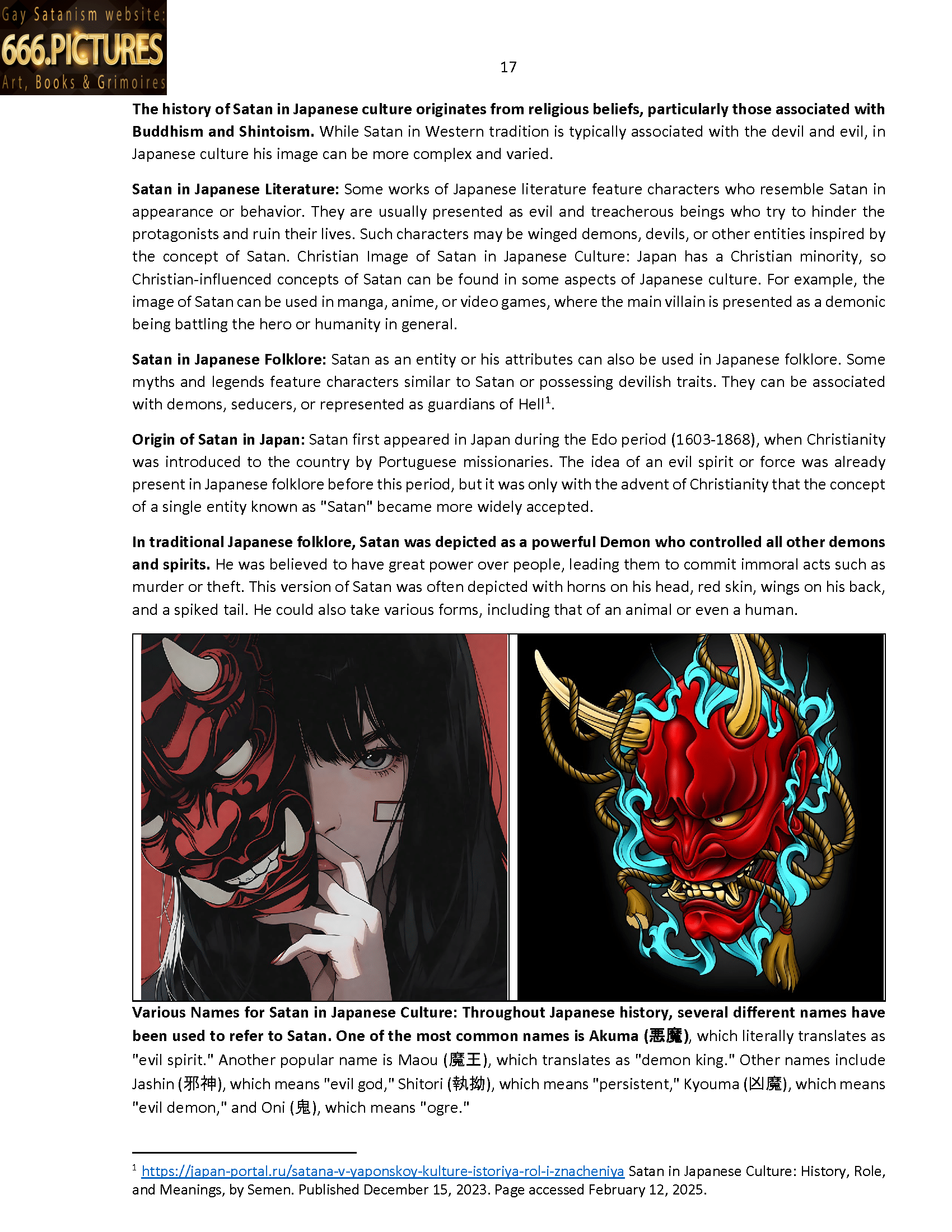
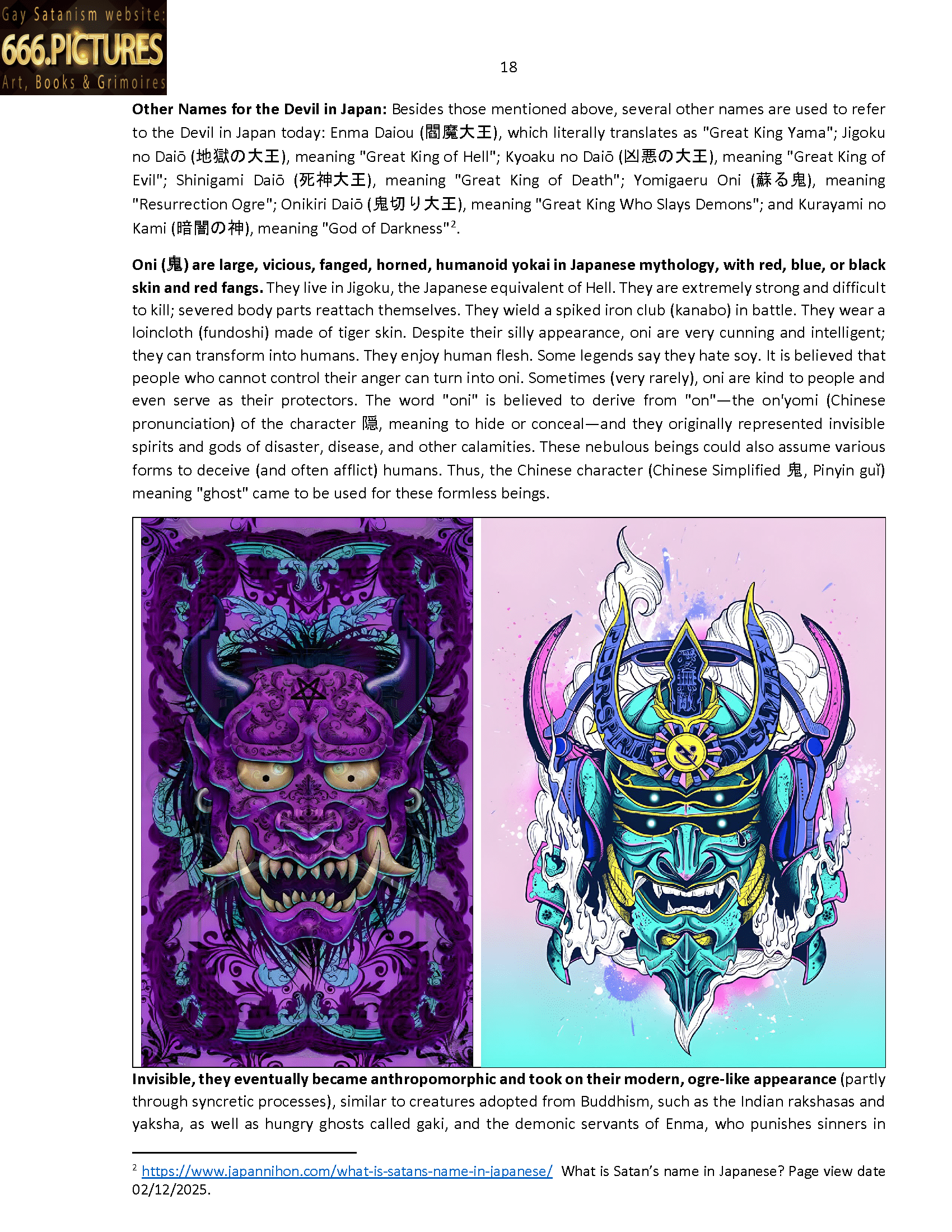
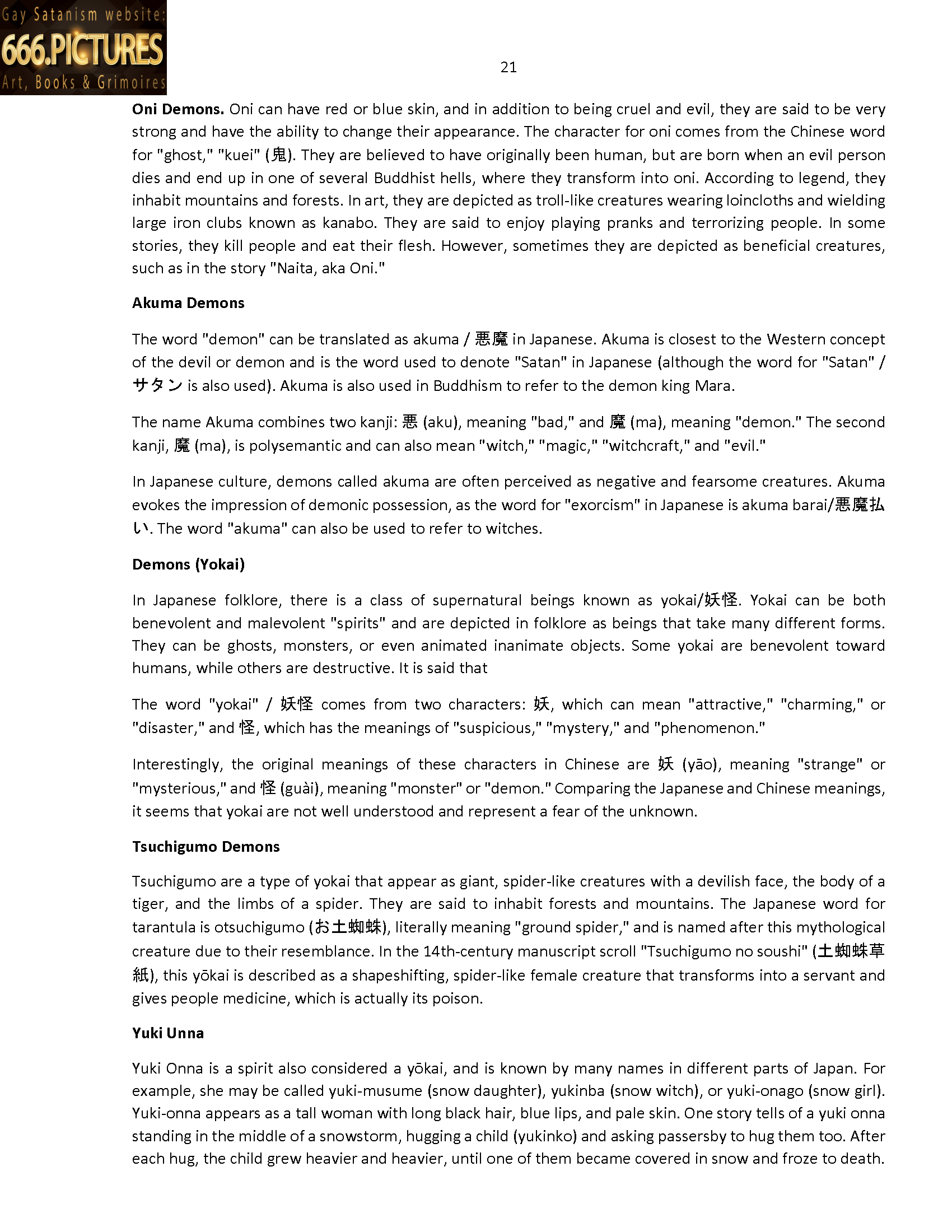
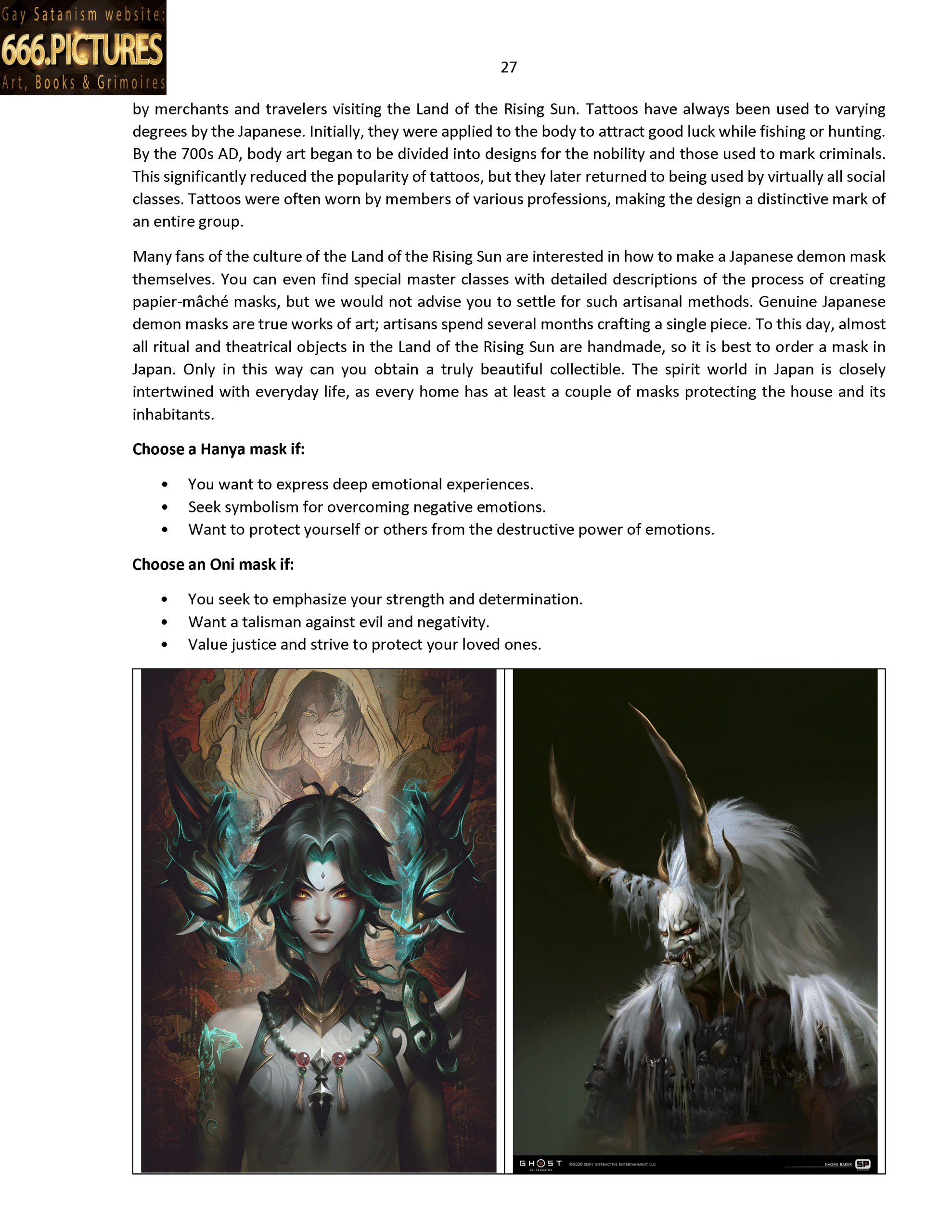
Oni (鬼) – in Japanese mythology – large evil fanged and horned humanoid yokai with red, blue or black skin, living in Jigoku, the Japanese analogue of Hell. They are very strong and difficult to kill, severed body parts grow back into place. In battle, they use an iron club with spikes (kanabo). They wear a loincloth (fundoshi) made of tiger skin. Despite their stupid appearance, oni are very cunning and smart; they can turn into people. They love human flesh. Some legends say that they hate soy. It is believed that people who do not control their anger can turn into Oni. Sometimes (very rarely) They are kind to people and even serve as their protectors.
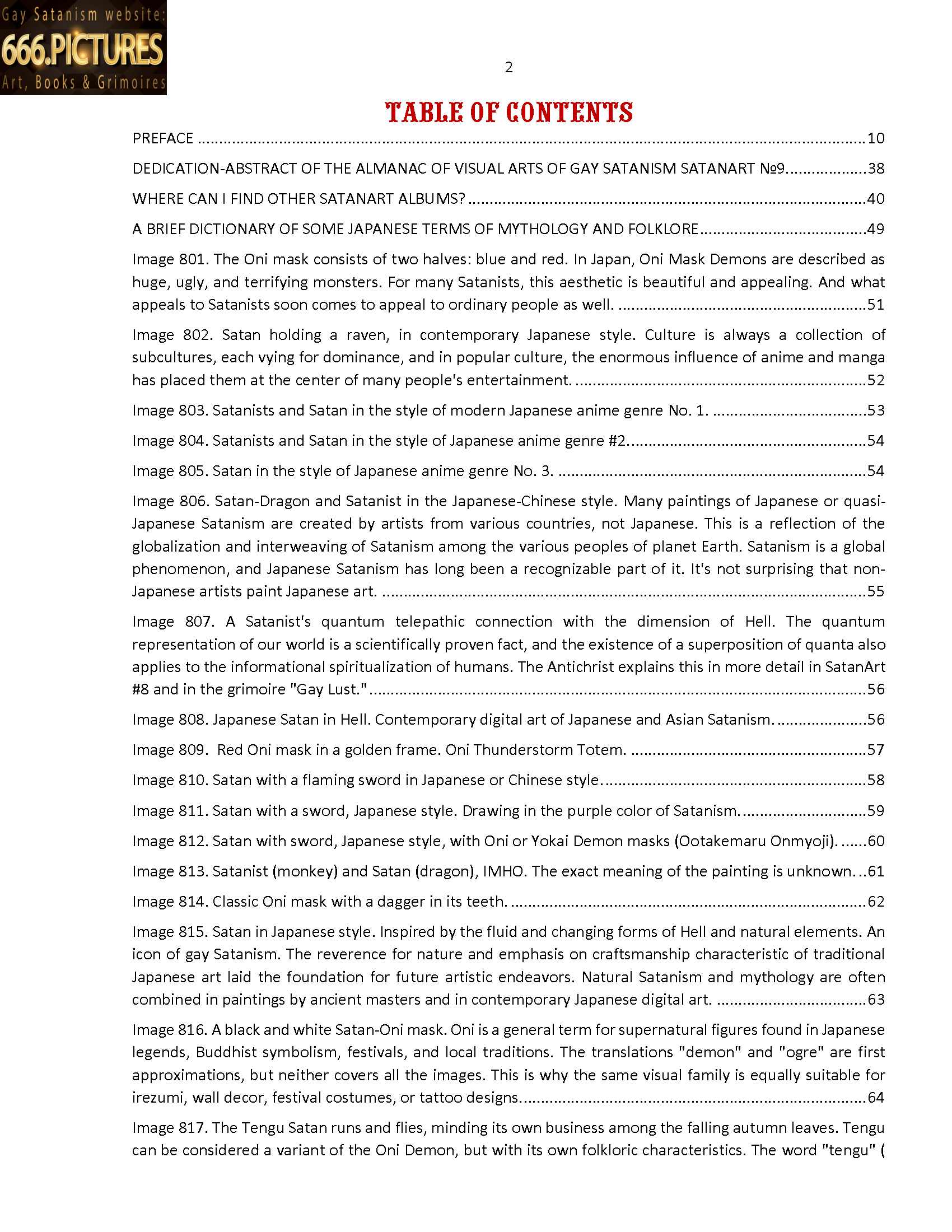
Almanac of the Gay Satanism’s art SatanArt. Nr. 9 “Japanese Satanism. Thunderstorm Oni. Satan in Japanese Art. Volume 1. Puritan edition. PDF high quality e-Book. Revised and improved Enhanced Edition V1.1.” TABLE OF CONTENTS
PREFACE 10
DEDICATION-ABSTRACT OF THE ALMANAC OF VISUAL ARTS OF GAY SATANISM SATANART №9. 38
WHERE CAN I FIND OTHER SATANART ALBUMS? 40
A BRIEF DICTIONARY OF SOME JAPANESE TERMS OF MYTHOLOGY AND FOLKLORE 49
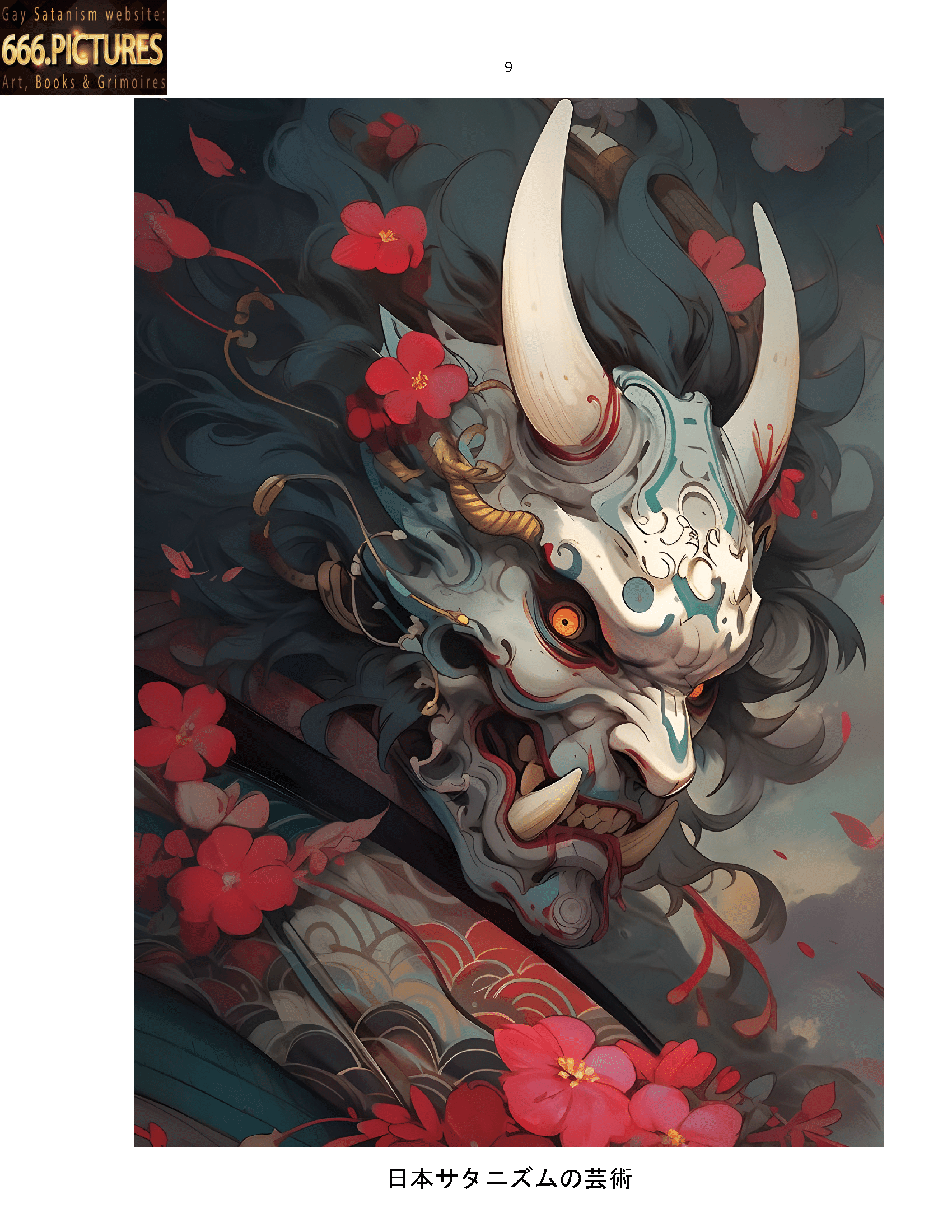
Image 801. The Oni mask consists of two halves: blue and red. In Japan, Oni Mask Demons are described as huge, ugly, and terrifying monsters. For many Satanists, this aesthetic is beautiful and appealing. And what appeals to Satanists soon comes to appeal to ordinary people as well. 51
Image 802. Satan holding a raven, in contemporary Japanese style. Culture is always a collection of subcultures, each vying for dominance, and in popular culture, the enormous influence of anime and manga has placed them at the center of many people’s entertainment. 52
Image 803. Satanists and Satan in the style of modern Japanese anime genre No. 1. 53
Image 804. Satanists and Satan in the style of Japanese anime genre #2. 54
Image 805. Satan in the style of Japanese anime genre No. 3. 54
Image 806. Satan-Dragon and Satanist in the Japanese-Chinese style. Many paintings of Japanese or quasi-Japanese Satanism are created by artists from various countries, not Japanese. This is a reflection of the globalization and interweaving of Satanism among the various peoples of planet Earth. Satanism is a global phenomenon, and Japanese Satanism has long been a recognizable part of it. It’s not surprising that non-Japanese artists paint Japanese art. 55
Image 807. A Satanist’s quantum telepathic connection with the dimension of Hell. The quantum representation of our world is a scientifically proven fact, and the existence of a superposition of quanta also applies to the informational spiritualization of humans. The Antichrist explains this in more detail in SatanArt #8 and in the grimoire “Gay Lust.” 56
Image 808. Japanese Satan in Hell. Contemporary digital art of Japanese and Asian Satanism. 56
Image 809. Red Oni mask in a golden frame. Oni Thunderstorm Totem. 57
Image 810. Satan with a flaming sword in Japanese or Chinese style. 58
Image 811. Satan with a sword, Japanese style. Drawing in the purple color of Satanism. 59
Image 812. Satan with sword, Japanese style, with Oni or Yokai Demon masks (Ootakemaru Onmyoji). 60
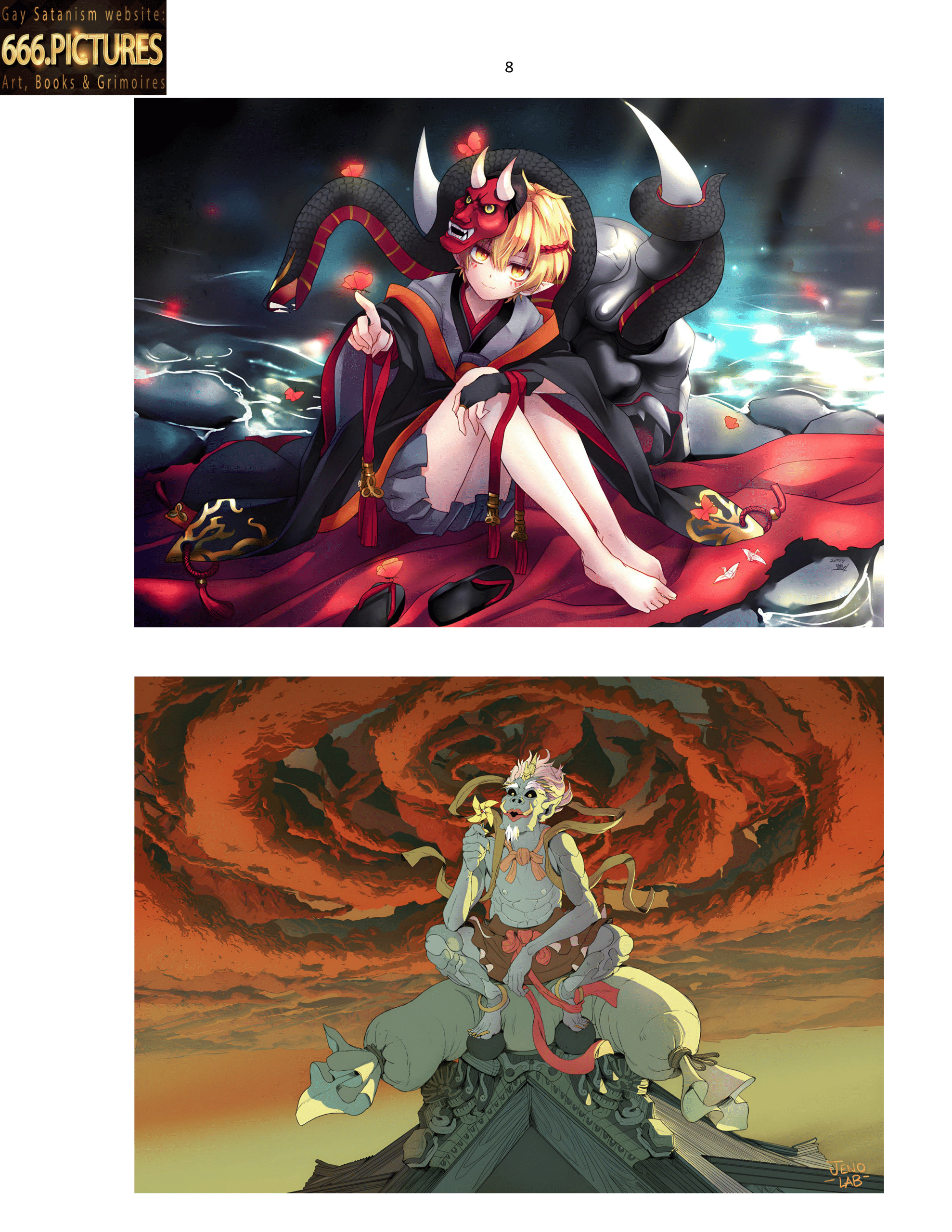
Image 813. Satanist (monkey) and Satan (dragon), IMHO. The exact meaning of the painting is unknown. 61
Image 814. Classic Oni mask with a dagger in its teeth. 62
Image 815. Satan in Japanese style. Inspired by the fluid and changing forms of Hell and natural elements. An icon of gay Satanism. The reverence for nature and emphasis on craftsmanship characteristic of traditional Japanese art laid the foundation for future artistic endeavors. Natural Satanism and mythology are often combined in paintings by ancient masters and in contemporary Japanese digital art. 63
Image 816. A black and white Satan-Oni mask. Oni is a general term for supernatural figures found in Japanese legends, Buddhist symbolism, festivals, and local traditions. The translations “demon” and “ogre” are first approximations, but neither covers all the images. This is why the same visual family is equally suitable for irezumi, wall decor, festival costumes, or tattoo designs. 64
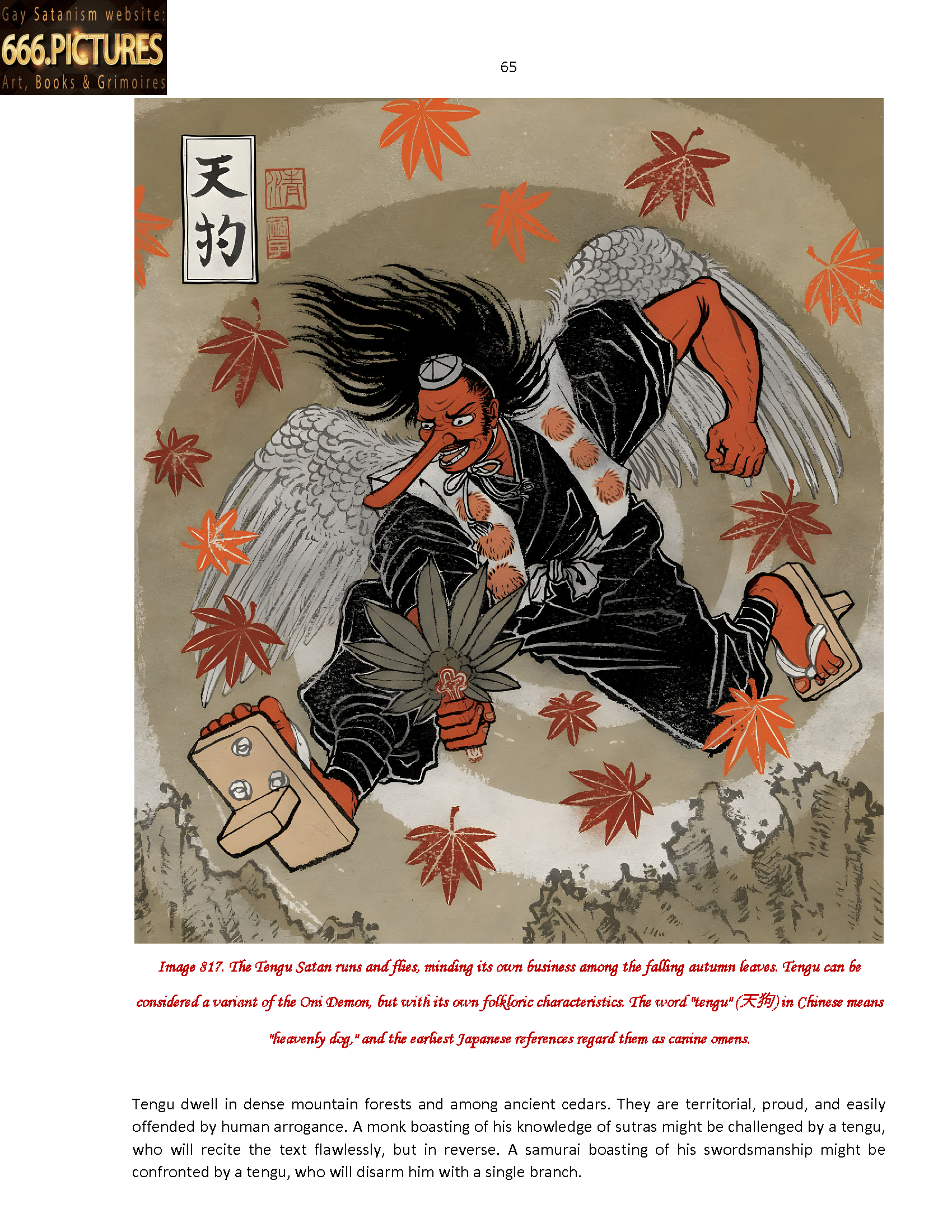
Image 817. The Tengu Satan runs and flies, minding its own business among the falling autumn leaves. Tengu can be considered a variant of the Oni Demon, but with its own folkloric characteristics. The word “tengu” (天狗) in Chinese means “heavenly dog,” and the earliest Japanese references regard them as canine omens. 65
Image 818. Satan-Oni mask in red tones with two cats. 66
Image 819. A Satanist among Japanese Satanism. Modern graphics, created for a computer game. 67
Image 820. Satan-Oni mask in red tones with a green snake. 68
Image 821. Satan-Oni mask in crimson tones with a bitten ink pen. 69
Image 822. Satan-Oni mask in gray tones with a bitten scroll. In flowers and in a frame. 70
Image 823. Satan-Oni in black Japanese attire. Modern Japanese Satanism graphics. 71
Image 824. Satan-Oni mask in green tones with lotus flowers. 72
Image 825. Japanese Satanists from a video game. The aesthetics of Japanese Satanism. 73
Image 826. Satan-Oni with a Japanese sword in red and black tones. Modern satanic art from Japan. 74
Image 827. Satan in Japanese-Chinese anime and games #1 74
Image 828. A Satanist with an Oni mask and a Japanese katana sword in the midst of events. Modern Japanese Satanism. 75
Image 829. Satan in Japanese-Chinese Anime and Games #2. Video games have become a powerful visual and interactive platform for Satanist artists. Furthermore, computer games themselves offer the opportunity to digitally construct a new reality, an important aspect of Satanism and Black Magic. 76
Image 830. Satan in Japanese-Chinese anime and games style #3. 77
Image 831. Oni Hannya. A Satanic Oni mask with a Japanese sun symbol. Oni masks are not directly associated with Satanism; they have roots in Japanese folklore and depict demons or cannibals capable of embodying both evil and protective properties. Despite their frightening appearance, their cultural use is often intended to ward off evil spirits and bring good luck, rather than symbolize Satanic beliefs. 78
Image 832. Japanese Satanist and Japanese Satanist Aesthetics #1. Many won’t see Satanism in this film; the Antichrist allows it. Many Satanic films, in fact, mimic fantasy. 79
Image 833. Satan-Samurai with the powers and spirits of Hell. 80
Image 834. Japanese Satanist and Japanese Aesthetics of Satanism #2. 81
Image 835. Satan in Japanese style (possibly). 81
Image 836. A visualization of Satan-Oni as a Samurai of Satanism. An icon of Japanese Satanism. 82
Image 837. Japanese (possibly Chinese) Satan-Samurai. Japanese art is intertwined with Chinese art. 83
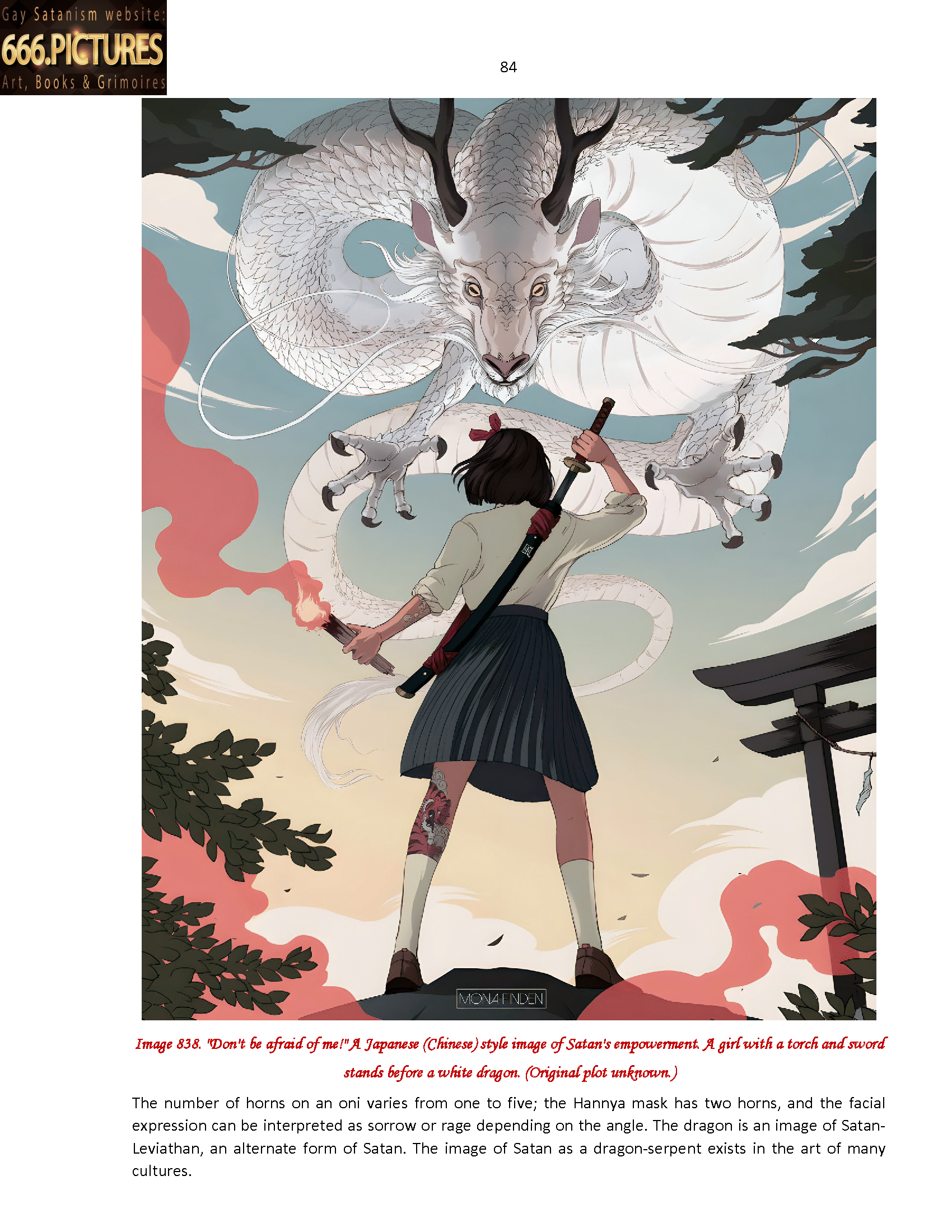
Image 838. “Don’t be afraid of me!” A Japanese (Chinese) style image of Satan’s empowerment. A girl with a torch and sword stands before a white dragon. (Original plot unknown.) 84
Image 839. An example of classic Japanese graphic art. A Satanist with an Oni Satan. 85
Image 840. A Japanese Satanist with an Oni Satan mask. Modern Satanic graphics. 86
Image 841. Japanese Demon-Satan: Yokai or Oni. An ancient Japanese depiction with calligraphy. 87
Image 842. Japanese Satanist. The aesthetics of Japanese Satanic art. 88
Image 843. Japanese Satanist. The aesthetics of Japanese Satanic art. 89
Image 844. Oni Devil Mask in red and green tones. 90
Image 845. An Oni Devil mask in gray and red tones. A modern interpretation of the Oni Demon. 91
Image 846. A modern depiction of the Japanese Satan Youth with a katana. 92
Image 847. Portrait of Satan-Samurai with a hat and swords. 93
Image 848. Satan with Oni masks. Graphics from a computer game. 94
Image 849. A Satanist with Oni masks. The spirits of Satanism surround the Satanist. 94
Image 850. Oni Demon Mask in red and yellow tones. 95
Image 851. Spirits of Satanism in Japanese style No. 1. 96
Image 852. Spirits of Satanism in Japanese style No. 2. 96
Image 853. Japanese Satanism. Satan-Death in the form of a geisha. 97
Image 854. Oni Demon mask in black and red tones. 98
Image 855. Oni mask with flowers. Black and white. 99
Image 856. Satan-Oni mask in black and red. The classic Oni Demon image, in original colors. 100
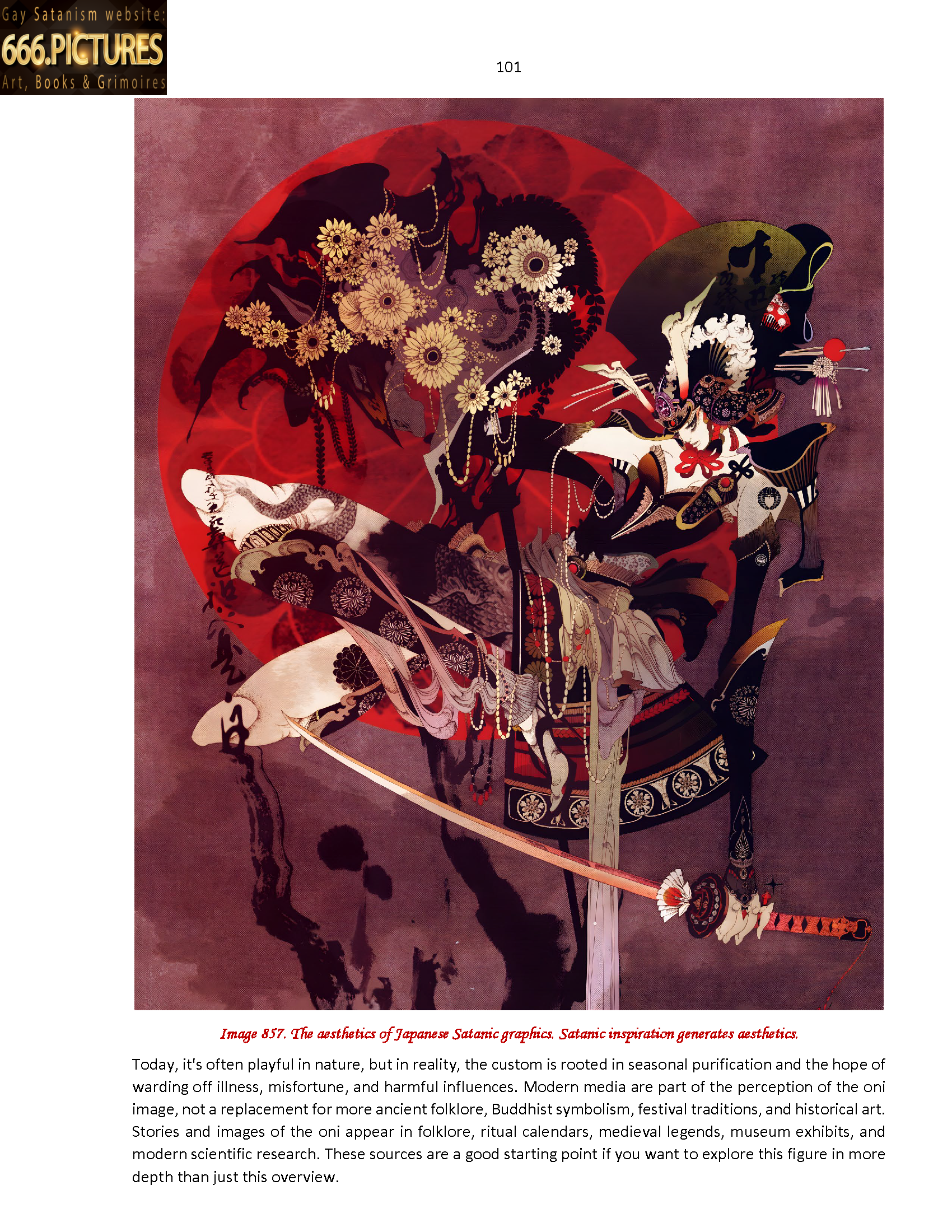
Image 857. The aesthetics of Japanese Satanic graphics. Satanic inspiration generates aesthetics. 101
Image 858. Satan, among the Spirits of Satanism, represented by Oni masks. A contemporary depiction of Japanese Satanism by artist Deepcake. The artist states in his profile that he is from the USA and paints in the genre of “Altered Perception Fantasy” (in Russian). https://deepcake.artstation.com/. 102
Image 859. An Oni demon in an antique Japanese woodblock print. It’s unclear whether this is an antique print or a modern reproduction. However, it’s possible to find out if anyone’s interested. 103
Image 860. Japanese mask of the demon Satan-Tengu. 104
Image 861. Androgynous Satanist with Satan-Dragon in Japanese style. Light Satanism and fantasy. 105
Image 862. The demon Satan-Oni in the form of a Japanese samurai. 106
Image 863. An oni mask in an old-style Japanese painting. 107
Image 864. Satan holding the Antichrist. Satanic art in Japanese style. The Japanese and Asians are generally not Christians and do not believe in Jesus of Nazareth, whom the Christian sect portrays as the messiah, savior, and god. Therefore, the theme of the Antichrist is not explored in Japanese art and mythology. Perhaps this will change in the future, but the Antichrist is not counting on it. 108
Image 865. Japanese Satanist or Satan-Incarnate with swords and Oni No. 1 mask. 109
Image 866. Japanese Satanist or Satan-Incarnate with swords and Oni mask No. 2. 110
Image 867. Satan-Oni, biting the blades of daggers. The combination of the Oni Demon with swords and blades is a classic of Japanese art. Interestingly, the cannibal Oni is depicted with a club, while modern Oni are depicted with blades. 111
Image 868. Oni Demon’s depiction in grey tones. 112
Image 869. Satanists of Japan. Pink Stars. Japanese anime graphics. 113
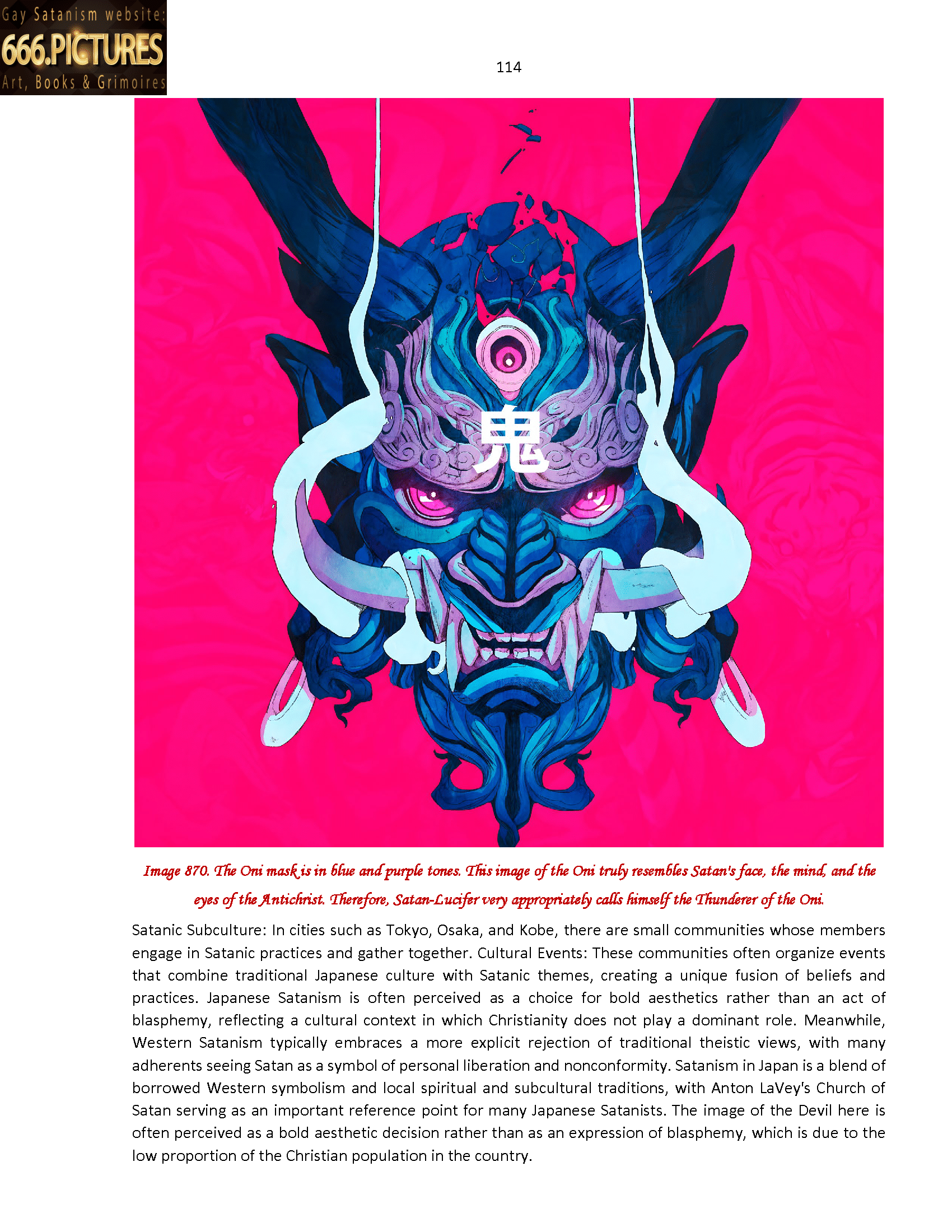
Image 870. The Oni mask is in blue and purple tones. This image of the Oni truly resembles Satan’s face, the mind, and the eyes of the Antichrist. Therefore, Satan-Lucifer very appropriately calls himself the Thunderer of the Oni. 114
Image 871. Japanese Satan from contemporary Japanese digital art #1. Japanese Satanism has virtually no connection to Christianity or the European concept of Satan that most people hold. 115
Image 872. Japanese Satan from contemporary digital art of Japan #2. 115
Image 873. Japanese Satan or Satanist with axes and a bunny mask. 116
Image 874. The Oni mask is in metallic grey tones. 117
Image 875. A Satanist standing on an Oni mask. Contemporary Japanese digital art. Onmyoji. Onmyoji is a 3D RPG developed by NetEase Games. Follow the legendary onmyoji Seimei on his journey to regain his lost memories, while facing demons of all kinds. 118
Image 876. The mask has simple, smooth lines and a monochrome design. 119
Image 877. Satan leads a Japanese Satanist. A style of Japanese cuteness and childlike innocence. 120
Image 878. A serious Satan-Oni with a crown and club. An icon of gay Satanism from Japan. 121
Image 879. Satan with Oni masks and a set of numbers 6 9. The Japanese use the symbolism of 666 in their own style. 122
Image 880. Japanese Satan with Oni masks around him and a sword. From a computer game. 123
Image 881. Japanese (or Chinese) Satanist with Dragon-Satan. 124
Image 882. Cute Japanese anime characters with modern satanic graphics. Plot unknown. 125
Image 883. Beautiful Satan. Presumably Japanese art. 126
Image 884. A Satanist, supported by the forces of Hell. A multitude of arrows fly at the creatures of evil. Japanese Satanism does not stand still, but continues to evolve through modern digital forms of computer graphics. 127
Image 885. A Japanese Satan with a katana and a bloody rag. The drawing of Japanese Satanism, without the Oni mask. 127
Image 886. A Japanese Satanist with a red Dragon-Satan. Traditionally in Japan, the dragon is a powerful creature that uses its power for good. The combination of a dragon tattoo and an Oni tattoo can symbolize a person’s inner struggle between good and evil. The dragon is a form of Satan-Leviathan. This image of Satan is found in many cultures around the world, but is called by different names. 128
Image 887. Satan Samurai with the spirits of Satanism in Japanese style. 129
Image 888. A Satanist with a katana sword and an oni mask on her stomach. Japanese or Chinese graphics. 130
Image 889. A Satanist with a bow, mask, and skeleton. An Oni mask, shaped like a skull, unpainted. An icon of Japanese Satanism. The exact meaning of this painting is unknown to the Antichrist Slut Sodomia. 131
Image 890. Satan-Oni with flowers and a cat. Decorative satanic art from Japan or in Japanese traditions. Illustration by unknown. 132
Image 891. Blue Oni-Satan, in the form of a mask with a bitten trident object. 133
Image 892. A cute blue Satan-Oni, in the style of an old Japanese print. Oni masks are a striking example of how symbols can change over time. This symbol of rich Japanese culture was originally a personification of evil, depicting demons seeking to drag the souls of the dead to Hell. However, today these creatures carry a completely different meaning. 134
Image 893. Satan-Oni as an ogre in a cave. A painting in the style of an old Japanese print. 135
Image 894. A Satanist with swords, opposite the Satan-Oni mask. Visualization of Satan’s spiritualization. 136
Image 895. Satan-Oni with a bitten scroll of wisdom. Contemporary decorative art from Japan. Artist and designer Sam Philips. 137
Image 896. Satan-Oni mask with two fish. In purple and blue tones. Japanese decorative art. 138
Image 897. Satan-Oni in the form of a red-pink monster with a knife and a sword. 139
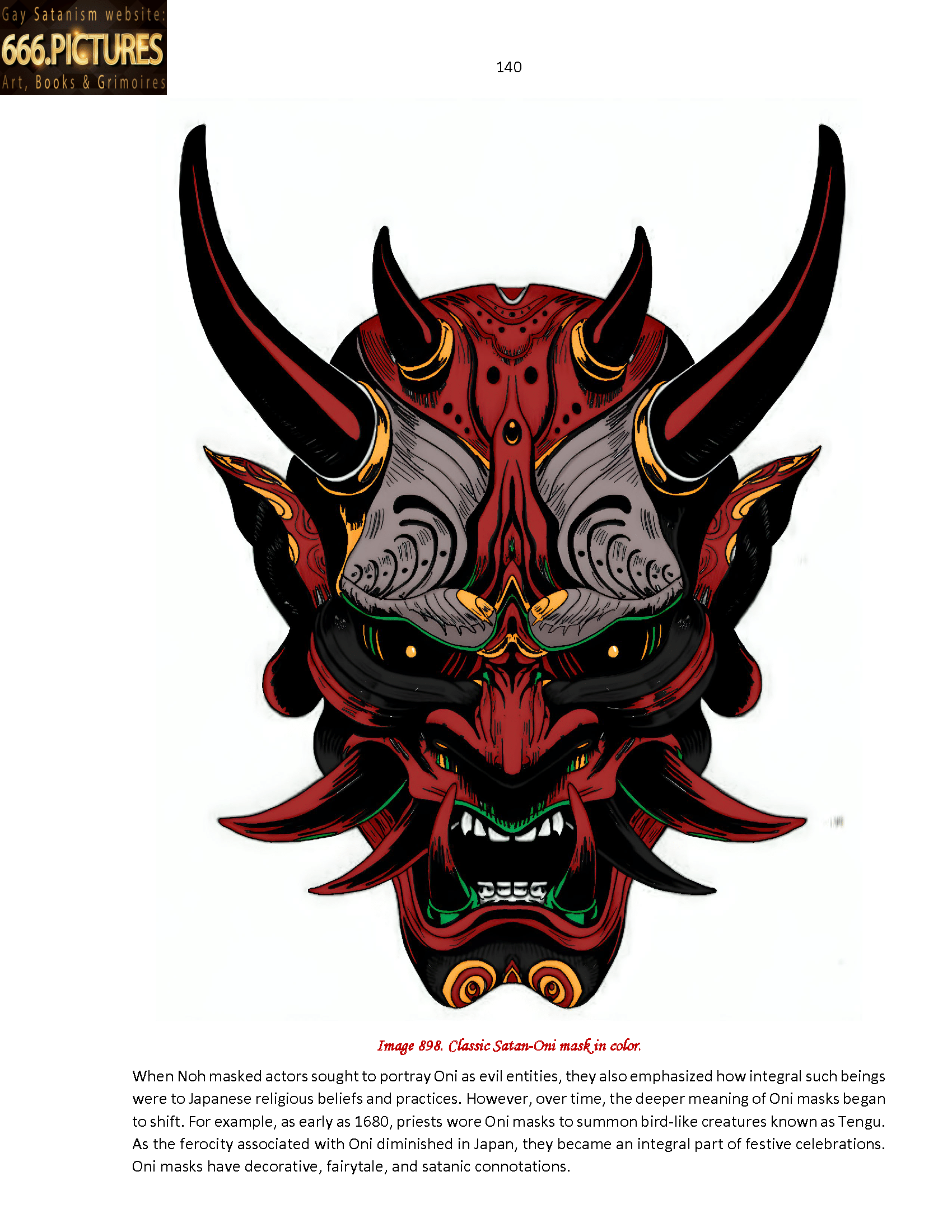
Image 898. Classic Satan-Oni mask in color. 140
Image 899. A purple-crimson Satan-Samurai, in the Japanese style. Satan with swords and horns is a classic image in Satanism, not only among the Japanese but also among various peoples of the world. 141
Image 900. A Japanese geisha prostitute with a Satan-Oni mask. All good bitches are Satan’s sluts (bitches) and whores. 142
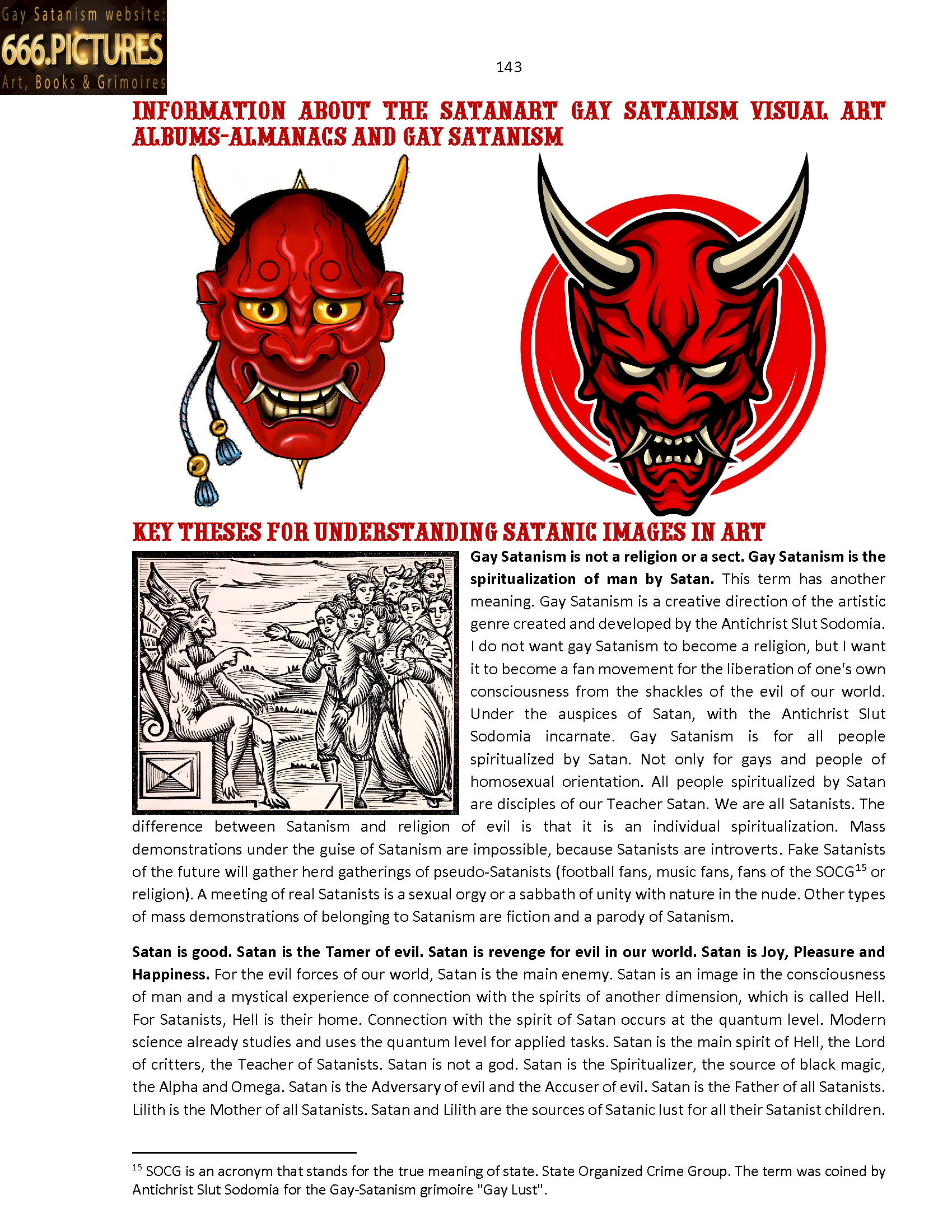
INFORMATION ABOUT THE SATANART GAY SATANISM VISUAL ART ALBUMS-ALMANACS AND GAY SATANISM 143
KEY THESES FOR UNDERSTANDING SATANIC IMAGES IN ART 143
SATANIC SYMBOLISM: RETHINKING SATANIC ART AND PHILOSOPHY OF THE CULTURE OF SATANISM. 151
IMAGE SOURCES AND IMAGE COPYRIGHTS 152
ABOUT IMAGE FORMATS IN GAY SATANISM PUBLICATIONS – PNG, JPG, WEBP, SVG. 152
DISTRIBUTION OF GAY SATANISM BOOKS AND ART APPLICATIONS IN VARIOUS DIGITAL FORMATS 153
FREEDOM OF DISTRIBUTION OF ANY INFORMATION 156
METHODS OF PAID AND FREE DISTRIBUTION OF GAY SATANISM PUBLICATIONS. LICENSE 156
TRANSLATION OF THE ALBUM OF SATANIC DRAWINGS SATANART INTO OTHER LANGUAGES OF THE WORLD 157
DONATIONS TO THE AUTHOR AND ROYALTIES WHEN SALES OF A BOOK IN PRINT AND ELECTRONIC FORM 158
SLUT SODOMIA’s CRYPTOCURRENCY ACCOUNTS FOR ROYALTIES’ PAYMENTS AND DONATIONS 159
ABOUT ADDITIONS TO THE GRIMOIRE “GAY LUST” FOR DEPTH SPIRITUALITY BY SATAN 160
DON’T HESITATE TO BE A SATANIST! 160
NUMBERING AND CONTENTS OF COLLECTIONS-ALBUMS OF SATANIC PICTURES SATANART 160
ADDITIONAL INFORMATION ABOUT GAY SATANISM FROM ANTICHRIST SLUT SODOMIA 161
LIST OF ADDITIONAL APPENDICES TO THE GRIMOIRE OF GAY SATANISM FOR IN-DEPTH SPIRITUALITY WITH SATAN 161
ANNOUNCEMENT OF THE RELEASE OF THE NEW ALMANAC-ALBUM OF SATANIC MUSIC SATANSONGS №5 FROM THE ANTICHRIST SLUT SODOMIA. 162
THE COVERS OF SELECTED EDITIONS OF SATANART ALMANACS, COMPILED & PUBLISHED BY THE ANTICHRIST SLUT SODOMIA. 164
ABOUT THE DEVELOPMENT, IMPORTANCE AND USE OF CRYPTOCURRENCY 167
GAY-SATANISM IN ENGLISH ON THE INTERNET 171
- Japanese Spirit World: A Brief Map
Japanese tradition is replete with creatures that can be divided into several groups.
Kami. These are sacred forces that live in mountains, rivers, trees, stones and in the souls of the dead. The concept is much broader than the word “god”: a kami can be both a benefactor and a source of danger. Shintoism does not seek to “defeat” the dark side of the kami, it seeks a way to come to terms with it.
Yokai. This is a broad category of strange, monstrous and supernatural creatures. These include kappa living in ponds, kitsune and tanuki with the gift of werewolf, tengu living in the mountains, yuki-onna, tsukumogami – things that received a soul after a hundred years, and many others.
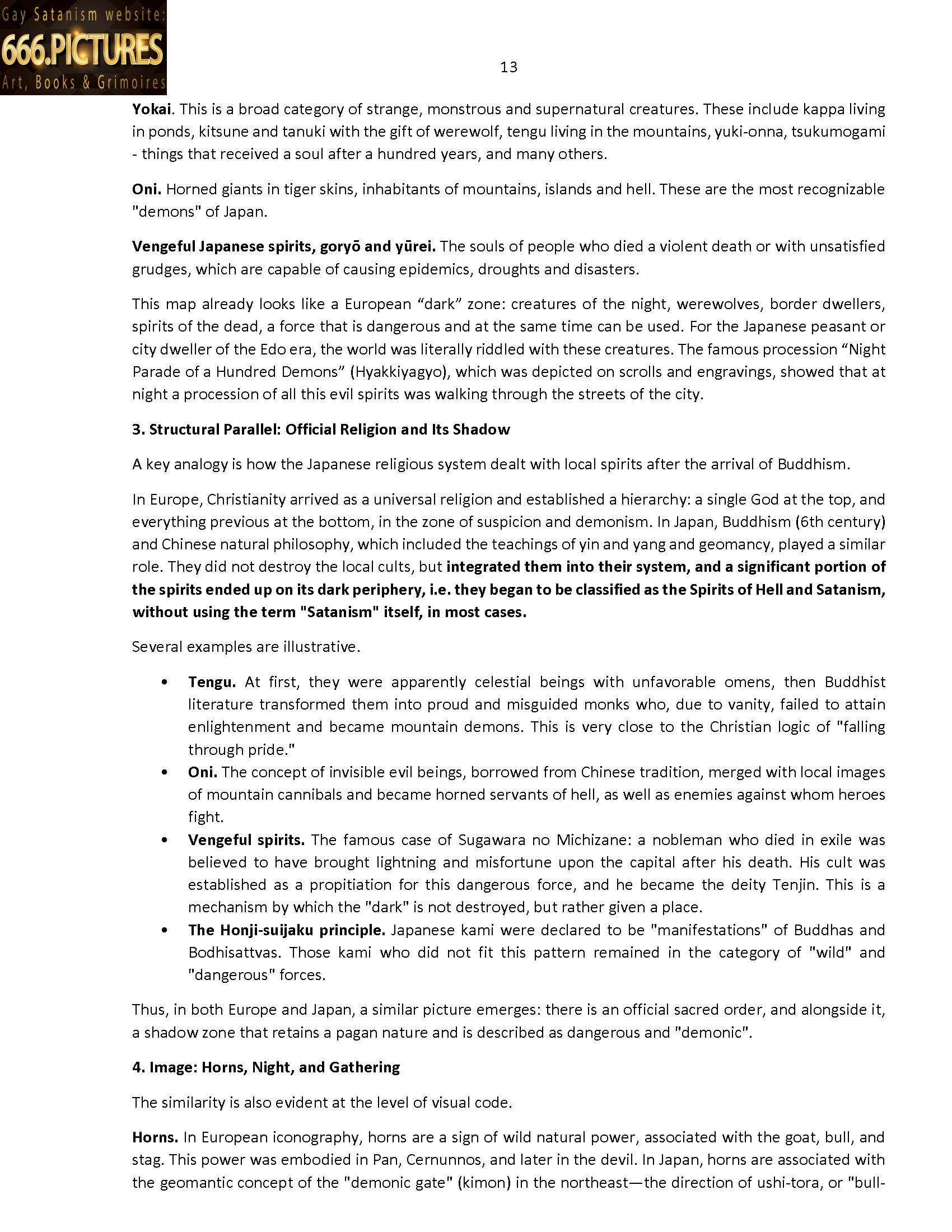
Oni. Horned giants in tiger skins, inhabitants of mountains, islands and hell. These are the most recognizable “demons” of Japan.
Vengeful Japanese spirits, goryō and yūrei. The souls of people who died a violent death or with unsatisfied grudges, which are capable of causing epidemics, droughts and disasters.
This map already looks like a European “dark” zone: creatures of the night, werewolves, border dwellers, spirits of the dead, a force that is dangerous and at the same time can be used. For the Japanese peasant or city dweller of the Edo era, the world was literally riddled with these creatures. The famous procession “Night Parade of a Hundred Demons” (Hyakkiyagyo), which was depicted on scrolls and engravings, showed that at night a procession of all this evil spirits was walking through the streets of the city.
- Structural Parallel: Official Religion and Its Shadow
A key analogy is how the Japanese religious system dealt with local spirits after the arrival of Buddhism.
In Europe, Christianity arrived as a universal religion and established a hierarchy: a single God at the top, and everything previous at the bottom, in the zone of suspicion and demonism. In Japan, Buddhism (6th century) and Chinese natural philosophy, which included the teachings of yin and yang and geomancy, played a similar role. They did not destroy the local cults, but integrated them into their system, and a significant portion of the spirits ended up on its dark periphery, i.e. they began to be classified as the Spirits of Hell and Satanism, without using the term “Satanism” itself, in most cases.
Several examples are illustrative.
- At first, they were apparently celestial beings with unfavorable omens, then Buddhist literature transformed them into proud and misguided monks who, due to vanity, failed to attain enlightenment and became mountain demons. This is very close to the Christian logic of “falling through pride.”
- The concept of invisible evil beings, borrowed from Chinese tradition, merged with local images of mountain cannibals and became horned servants of hell, as well as enemies against whom heroes fight.
- Vengeful spirits. The famous case of Sugawara no Michizane: a nobleman who died in exile was believed to have brought lightning and misfortune upon the capital after his death. His cult was established as a propitiation for this dangerous force, and he became the deity Tenjin. This is a mechanism by which the “dark” is not destroyed, but rather given a place.
- The Honji-suijaku principle. Japanese kami were declared to be “manifestations” of Buddhas and Bodhisattvas. Those kami who did not fit this pattern remained in the category of “wild” and “dangerous” forces.
Thus, in both Europe and Japan, a similar picture emerges: there is an official sacred order, and alongside it, a shadow zone that retains a pagan nature and is described as dangerous and “demonic”.
- Image: Horns, Night, and Gathering
The similarity is also evident at the level of visual code.
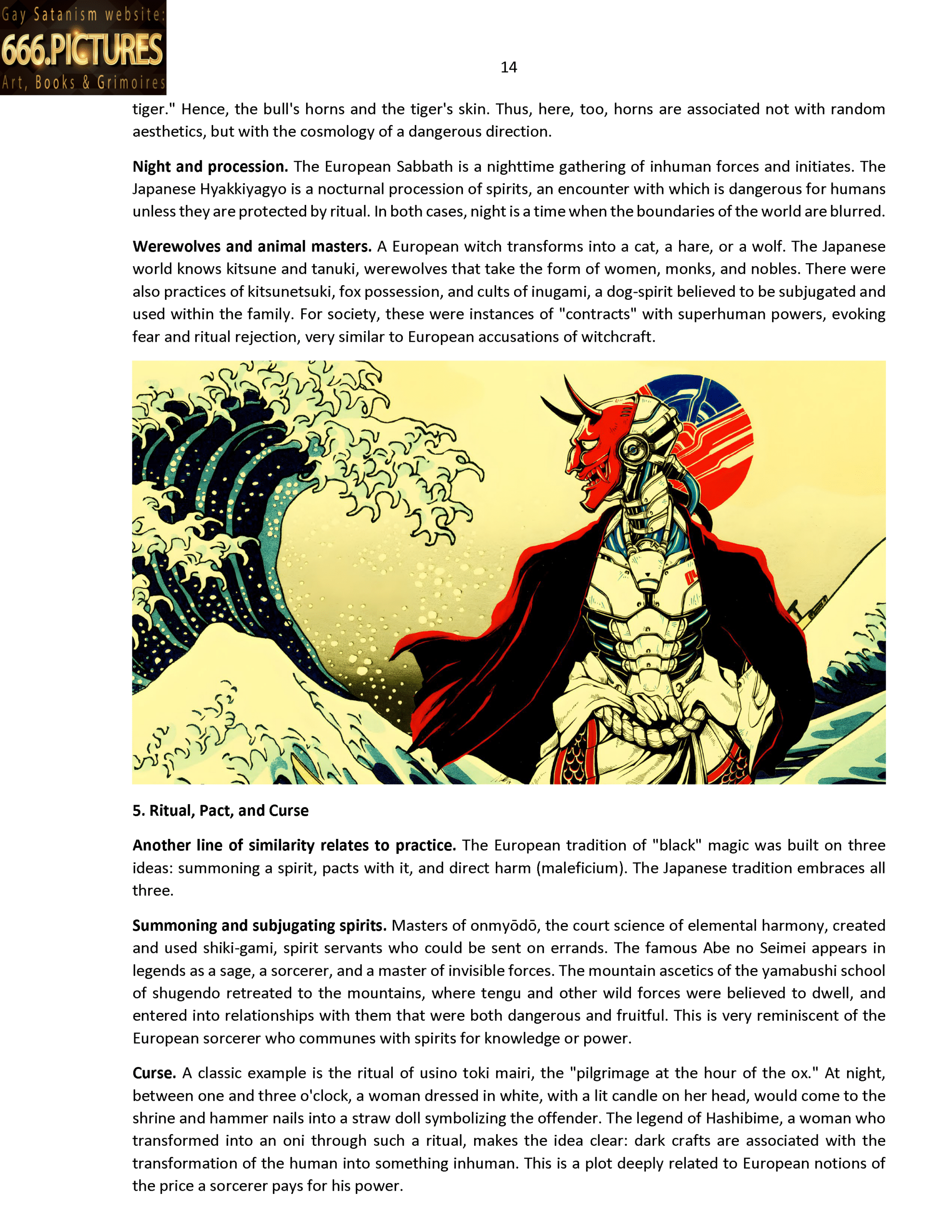
Horns. In European iconography, horns are a sign of wild natural power, associated with the goat, bull, and stag. This power was embodied in Pan, Cernunnos, and later in the devil. In Japan, horns are associated with the geomantic concept of the “demonic gate” (kimon) in the northeast—the direction of ushi-tora, or “bull-tiger.” Hence, the bull’s horns and the tiger’s skin. Thus, here, too, horns are associated not with random aesthetics, but with the cosmology of a dangerous direction.
Night and procession. The European Sabbath is a nighttime gathering of inhuman forces and initiates. The Japanese Hyakkiyagyo is a nocturnal procession of spirits, an encounter with which is dangerous for humans unless they are protected by ritual. In both cases, night is a time when the boundaries of the world are blurred.
Werewolves and animal masters. A European witch transforms into a cat, a hare, or a wolf. The Japanese world knows kitsune and tanuki, werewolves that take the form of women, monks, and nobles. There were also practices of kitsunetsuki, fox possession, and cults of inugami, a dog-spirit believed to be subjugated and used within the family. For society, these were instances of “contracts” with superhuman powers, evoking fear and ritual rejection, very similar to European accusations of witchcraft.
The e-books are SOLD in excellent digital quality at the Antichrist Slut Sodomia’s online store. You can read and download a free PDF version of this e-book from the Antichrist Slut Sodomia’s gay Satanism e-book store.
The store https://666.pictures/ offers free versions and high-quality paid versions of the original books by Antichrist. The free PDF e-book version of the Antichrist, the Slut Sodomia, is distributed WITH COMPRESSED IMAGES INSIDE THE PDF DOCUMENT. This PDF e-book version is 3-10 times smaller in file size. The image quality in the free version of the almanac is correspondingly 5 times smaller than the paid version.
HIGH-QUALITY and FULL-FEATURED PDF editions of gay Satanism e-books are SOLD in excellent digital quality at the Antichrist, the Slut Sodomia’s online store at: https://666.pictures/.
THE PAID VERSION OF THE GAY SATANISM ALMANAC CONTAINS HIGH-QUALITY GRAPHICS, suitable for printing. How can I distinguish the paid, high-quality version of the SatanArt almanac from the free one? Here are three differences:
- The paid version of the Satanic magazine SatanArt from the Antichrist PDF file is 70-150 MB, while the free version’s is 10-30 MB.
- The free version of the Satanic magazine SatanArt the low-quality images are immediately noticeable.
- The free versions of the Satanic magazine SatanArt have the word _SMALL at the end of the PDF file name, for example:
9-SatanArt-Fine-art-of-Gay-Satanism-ENGLISH-Satan-Japan-Art-Thunderstorm_ONI_PURITAN_VOLUME_1_V1.1_SMALL.pdf
 If you want to add a high-quality paid version of gay Satanism to your Satanism library, unadulterated by third-party advertising or censorship, and you need the latest version of the Antichrist Slut Sodomia publications with perfectly rendered graphics, then purchase the books from the official Gay Satanism website store https://666.pictures/.
The Elite VIP version of this PDF e-book, with images NOT HEAVY compressed by PDF compression software, is sold for cryptocurrency and can be downloaded from the website upon purchase. Remember that you pay for all e-books on the Gay Satanism website only after receiving them, i.e., after downloading them to your computer. Payment for goods at the Satanism bookstore 666.pictures occurs only after the buyer is satisfied with their purchase. The store only accepts cryptocurrency as payment. Payments in cryptocurrency can be made via fiat currency through electronic exchanges or non-custodial crypto wallets.
E-books magazine SatanArt in PDF format offer the advantage of maintaining a fixed layout, ensuring that the document appears the same on all devices, which is ideal for visually rich content. Additionally, PDFs are widely compatible and can be easily shared and printed, making them accessible to a broad audience.
The Portable Document Format (PDF) is highly valued for e-books because it preserves exact page layouts, fonts, and graphics across all devices. Unlike reflowable formats, a PDF locks visual elements in place, ensuring that the reader sees the identical layout regardless of screen size. This fixed-page design makes it the ideal choice for text-heavy or visually complex books like manuals, textbooks, comics, and art portfolios. Furthermore, PDFs offer universal compatibility without requiring specialized e-reader software, making them easy to share. They also support robust security options, such as password protection and printing restrictions, alongside helpful interactive elements like embedded hyperlinks and searchable text.
 Preservation of the FIRST SatanArt almanac Version 1.0, with the release of the improved and expanded edition V1.1. Archived version of the very first issue of SatanArt #9 “Japanese Satanism. Thunderstorm Oni. Satan in Japanese Art. Volume 1.” V1.0.
9-SatanArt-Fine-art-of-Gay-Satanism-ENGLISH-Satan-Japan-art-ONI_PURITAN_VOLUME_1_SMALL.pdf
Additional information
| The e-book is available for download | This book is in electronic form and is available for download immediately after purchase using access with URL |
|---|---|
| Document version | The first and only original version 1.0 |
| E-book type | High quality PDF file. Ebook in PDF format for printing & screens. This format is supported by multiple operating systems and applications for computers, smartphones, and tablets. |
| This is the original Gay Satanism file from Antichrist Slut Sodomia | This is the original eBook from Antichrist Slut Sodomia with perfect images resolution and the latest available version. |
| Language of the book | The book is in English. An English-language publication on Satanism, for LGBTQ+ and Satanists of all sexualities. |
| The level of eroticism of the publication | The Puritan edition of the book. This edition does not contain pornography, "sensitive content," or explicit erotica. |
| Year of publication of the book | 2025 |

Reviews
There are no reviews yet.