Gay Satanism or LGBTQ+ Satanism opposes global evil. Satan and the Antichrist need the help of enlightened people and Satanists to defeat the global evil. Satan resides in another quantum dimension, that is, in Hell, and the powers of Satan’s son, the Antichrist, are significantly outnumbered in our world. The Adversary Satan has power over our world, but the Emperor of Hell is only a Prince in our world. The Crown Prince of Hell, the Antichrist, also has limited informational influence on humanity in our world. In Hell, in another quantum dimension, where the informational entity is transferred after death, Satan-Lucifer and the Antichrist have complete power over evil creatures, but in our world, the forces of Hell do not have the same power as in Hell. Evil has captured the Satanists’ paradise, creating its own rules of life for everyone, and wreaking havoc on the entire world.
This is precisely why Satan and the Antichrist need people’s help in spreading Satanism. The Antichrist calls on all enlightened and conscious people to spread information about the gay Satanism of the Antichrist Slut Sodomia, online, in messengers, on torrents, and on the Darknet.
What are the main forces of evil that oppose Satanism, Satan, and the Antichrist? Here are the three main opponents of the return of paradise to planet Earth:
- Fascists – these creatures deprive people of physical freedom, perpetrate atrocities between different nations, and invent various rules to restrict the lives of all enlightened people and the enslaved plebs.
- Dogmatic religions are the main enemies of genuine human enlightenment through gnosis. In fact, gnosis is the Spirits of Hell or Satan-Lucifer himself. Only personal enlightenment by the Spirit of their EXQF (External Information Quantum Field) is the only true guiding star for any person. Dogmatic religions strive to prohibit the gnosis of personal spiritualization and replace it with their false ecclesiastical and religious dogmas.
- The procreated and unenlightened biohumus of evil are the hollow creatures that have proliferated in our world in enormous numbers, and in 2026 there are already over 8 billion of them. These hollow creatures serve as a biohumus upon which fascists and leaders of dogmatic religions thrive. All of them hinder the lives not only of themselves but also of enlightened people, including immortal Satanists.
What can you do to help spread Satanism and how can you become an apostle of Satanism?
Distribute gay Satanist links and materials online, preferably on sites indexed by search engines. By 2026, Google, the search engine and corporation, controls approximately 90% of global search traffic. This effectively means the monopolization and usurpation of the internet search field by a single company. Google LLC is an American multinational corporation, part of the Alphabet holding company, investing in internet search, cloud computing, and advertising technology. Google supports and develops numerous internet services and products and profits primarily from intrusive advertising for all internet users.
The Antichrist can’t say he completely dislikes Google products, but he has four main complaints about this internet monopoly giant, which extend beyond Satanism:
1. Google and its search and YouTube video hosting services are engaged in censorship and anti-Satanic SHADOW blocking of content. Moreover, these liars at Google constantly lie that no shadowbanning of websites exists. This is a lie, and gay Satanist websites are shadowbanned by Google, both in the search engine and on YouTube. The Antichrist has already personally verified this. Numerous websites are shadowbanned by Google, and this applies to all internet users.
2. Google collaborates with fascists and frames people, handing over all data to the villains at their request. Hundreds of thousands of people suffer from this collaboration between Google and global fascists every year. You can find investigations into this online, and of course, Google does everything “legally,” everything according to the laws of the fascists, i.e., the villains.
3. The Antichrist discovered that other search engines like DuckDuckGo.com, Bing.com, and Yahoo.com are good at indexing and displaying gay Satanist websites and information on Satanism in general. But Google, instead of adequate and relevant results on Satanism and black magic, displays websites of global hucksters, Orthodox sectarians, and meaningless, false books by anti-Satanists. Thus, Google’s search relevance is approaching zero (at least on “sensitive” topics). The Google AI itself told the Antichrist Slut Sodomia, this.
4. Google has usurped and monopolized internet search. A 90% market share allows this internet usurper to dictate its terms to website creators, ban information, censor content, and pollute the information space with intrusive advertising. Any monopoly and usurpation serves to undermine freedom of information and is directed against enlightened individuals.
The Antichrist Slut Sodomia asks for information and documents on gay Satanism to be disseminated, sharing links online, in instant messengers, on social media, in online torrent apps, and on the Darknet.
This will increase informational influence against the forces of evil in our world and bring closer the return of the Satanists’ paradise on planet Earth.
Remember that existence in our world is temporary and all people are mortal, without exception; even Satanists have mortal bodies. Of course, enlightened people can become candidates for Satanism during their lifetime. And after physical death in our world, they will become Satanists in Hell. Thus, the quantum entropy of Hell will not affect them, and the afterlife will continue, in the form of enlightened Satanists, among the gnosis of Satan and the Spirits of Hell, among Demons and Satanic lust in another quantum dimension.
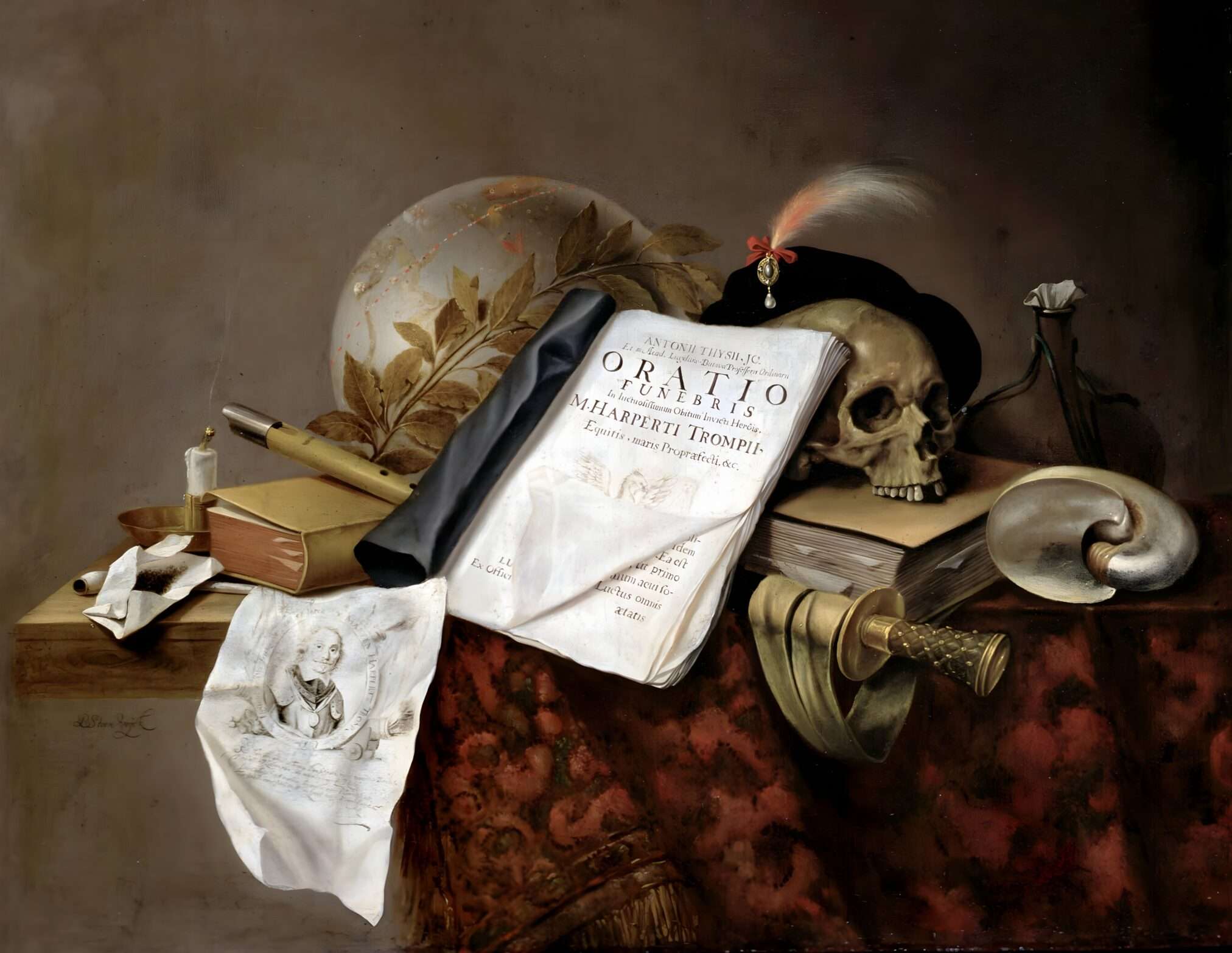
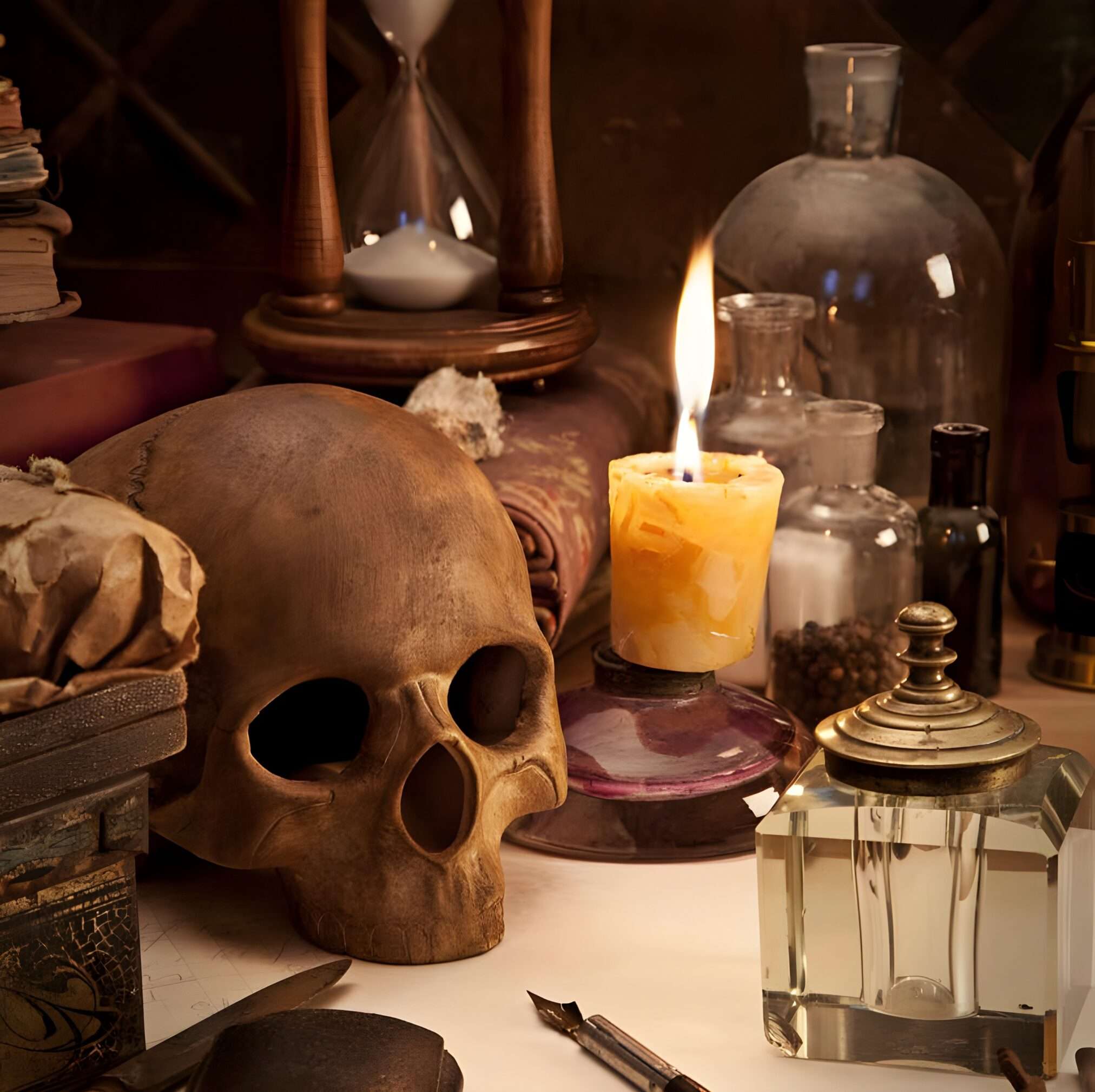
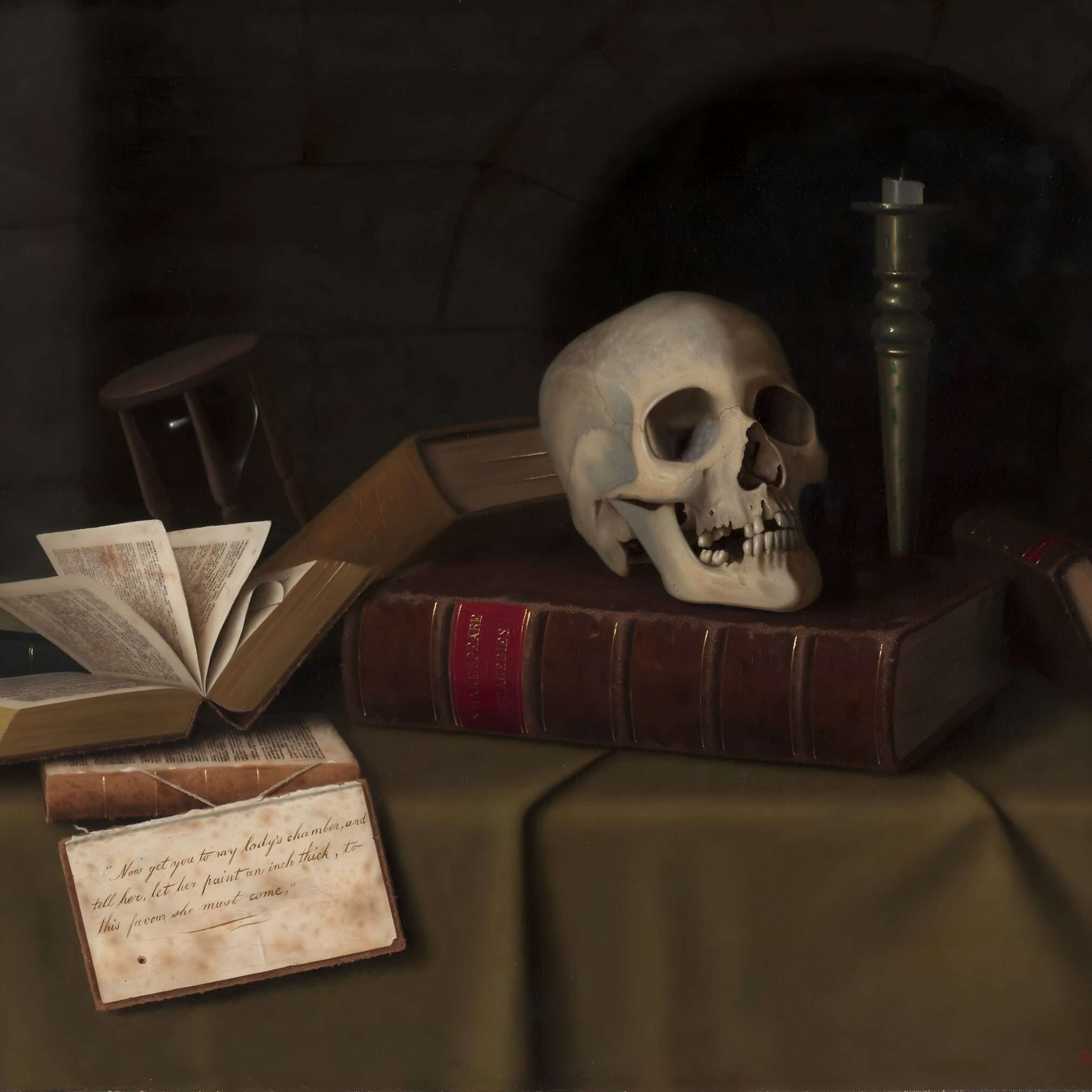
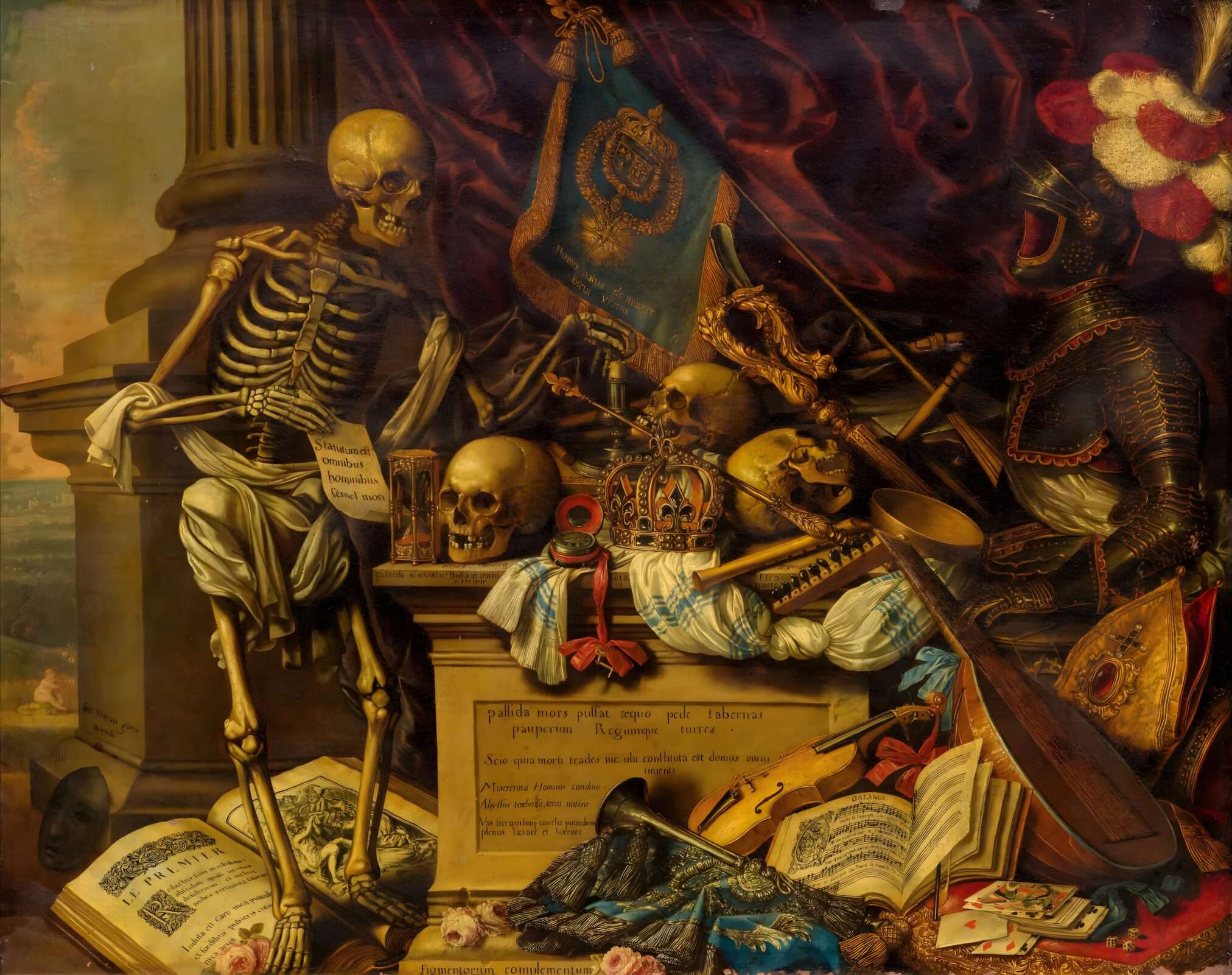
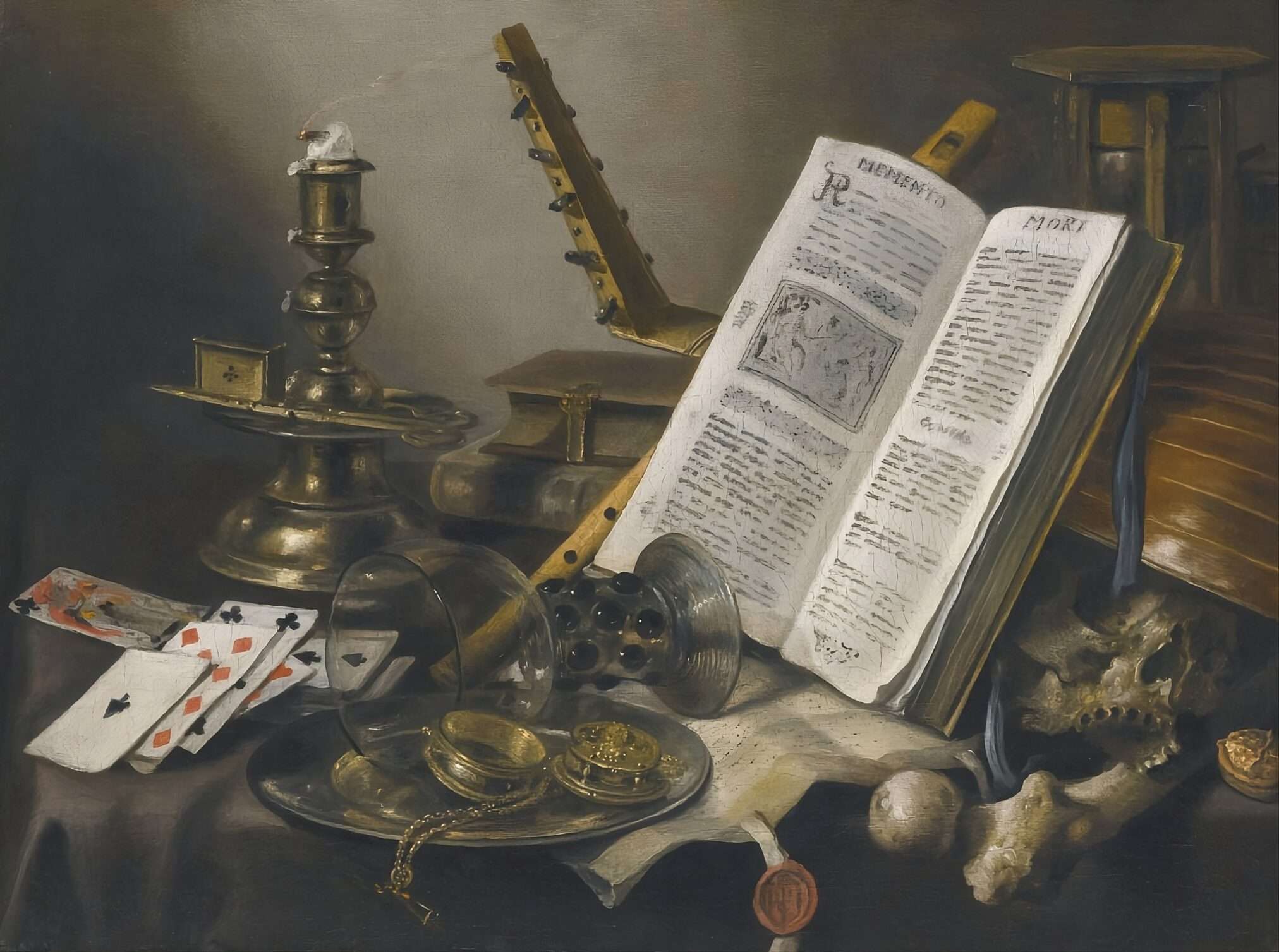
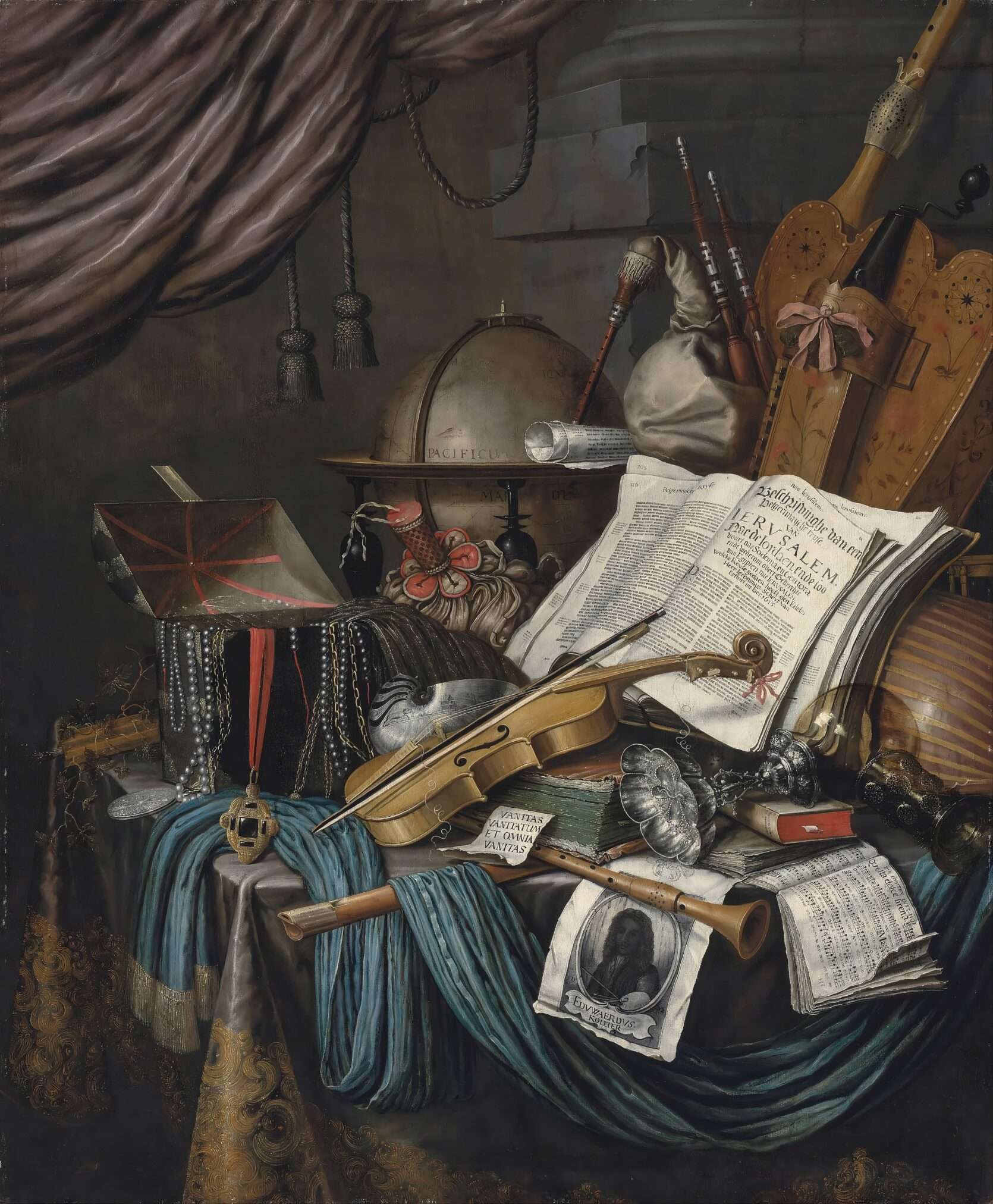
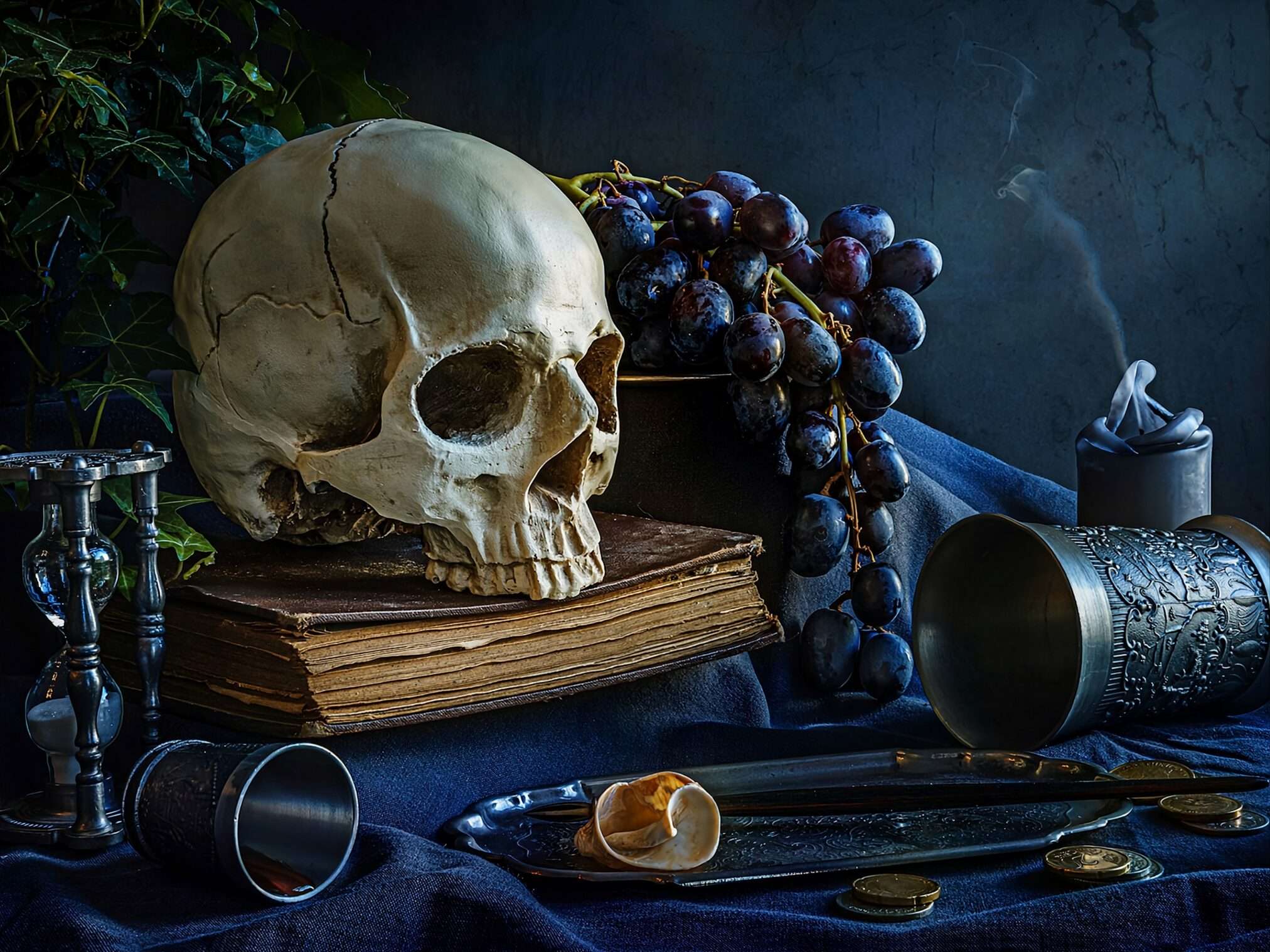
This article has turned out a bit… sad and businesslike, so I’ll add a touch of satanic pleasure for readers in the form of a collection of vanitas and memento mori paintings.
These two genres are very similar, but some art historians distinguish between them. These are satanic genres of art, and they are greatly favored by the Antichrist Slut Sodomia. I’ll provide an excerpt from an article about vanitas and memento mori, with a link to the source.
“Vanitas” and “memento mori” are two popular themes in art over the past few centuries. In this article, we’ll examine the differences between “vanitas” and “memento mori.” Both “vanitas” and “memento mori” are broad artistic themes found in both ancient and modern art. Due to their diversity and very long history, it’s sometimes difficult for viewers to form a clear understanding of the exact differences between “vanitas” and “memento mori.” It’s worth noting that they are most often associated with 17th-century Northern European art. Because the themes share many similarities, it can sometimes be quite difficult for viewers to discern the differences between them. To explore the characteristics of vanitas and memento mori, this article will use 17th-century paintings that serve as good examples for understanding how these two concepts work.
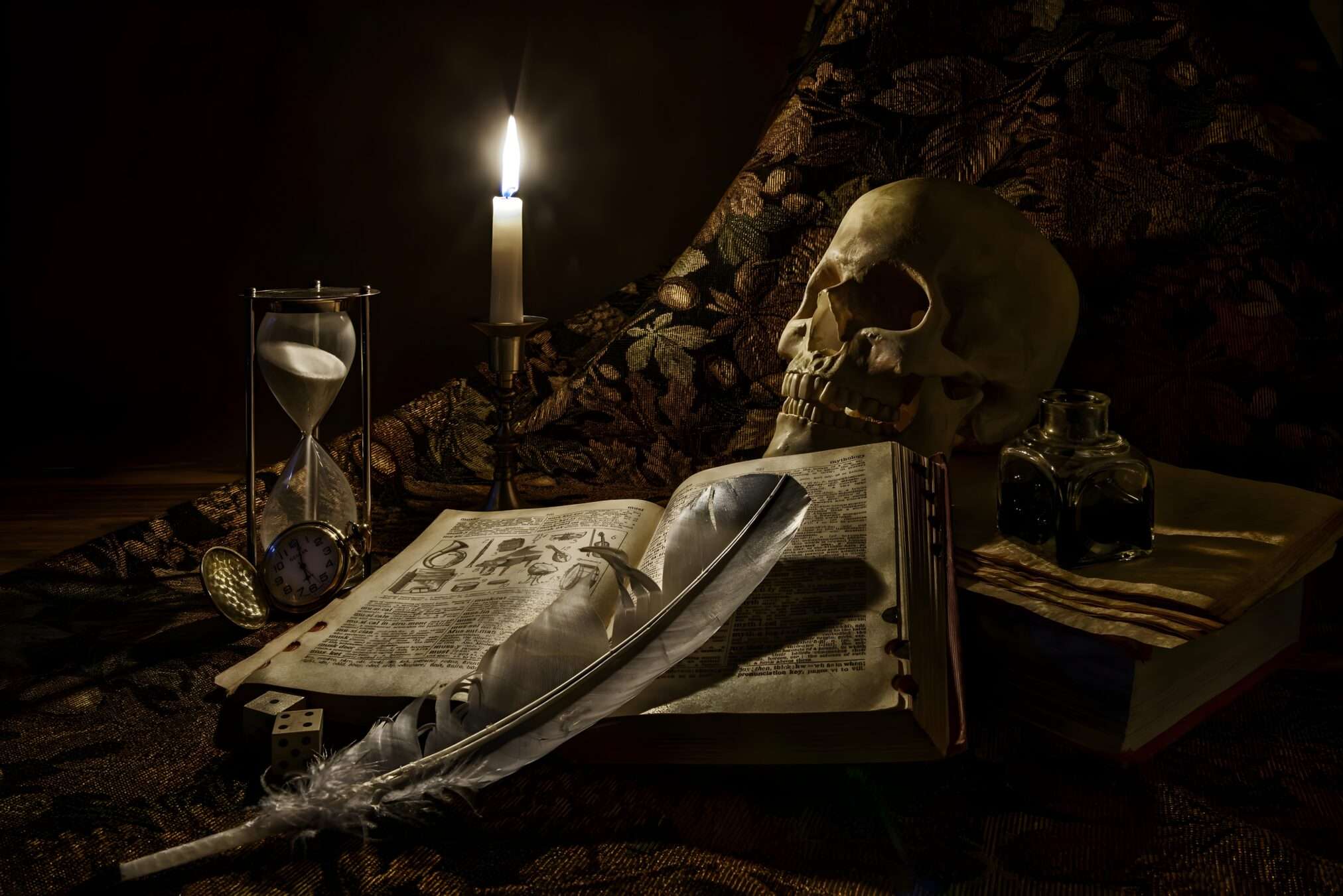
What are vanitas paintings?
The term “vanitas” (vanity) comes from the opening lines of the Book of Ecclesiastes. These lines read: “Vanity of vanities, saith the preacher, vanity of vanities, all is vanity,” i.e., “vanity.” According to the Cambridge Dictionary, vanity is an excessive preoccupation with one’s appearance or achievements. Vanity is closely associated with pride and ambition regarding material and ephemeral things. In the Book of Ecclesiastes, vanity is condemned because it is associated with impermanent things that distract our attention from the only certainty—death. The expression “vanity of vanities” is intended to emphasize the futility of all earthly things, reminding us of our approaching death.
A work of vanitas art can be considered such if it contains visual or conceptual references to the above passage. Vanitas conveys the idea of the futility of vanity, either directly or indirectly. For example, a work of art might feature displays of luxury goods, emphasizing this. It might also simply be a direct and straightforward depiction of a passage from the Book of Ecclesiastes.
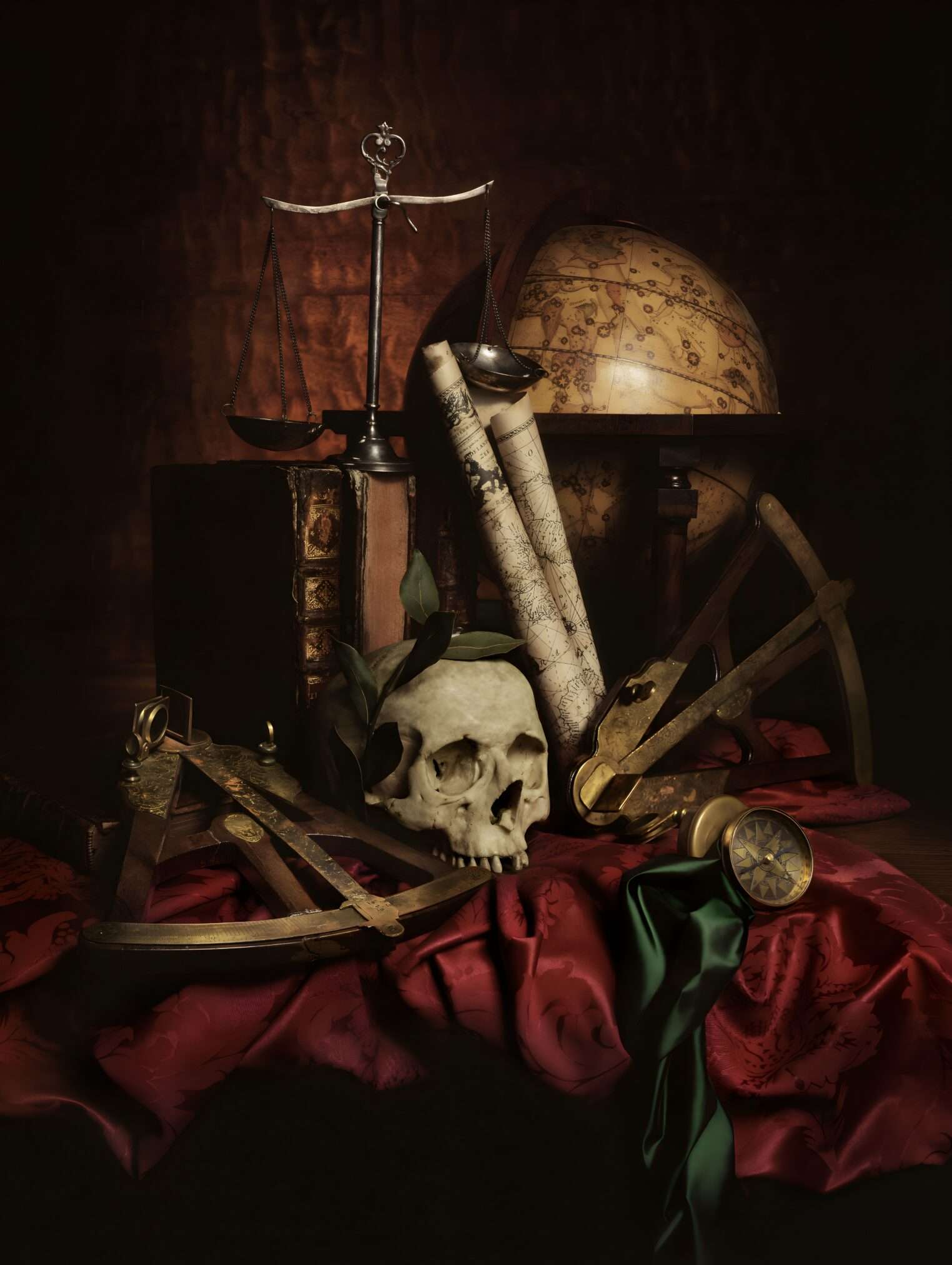
What is Memento Mori paintings?
The origins of the memento mori theme can be found in the same Latin phrase, which translates as “remember that you must die.” Like vanitas, memento mori emphasizes the ephemerality of life and the fact that life is always followed by death.
The expression memento mori (remember that you must die) is a warning, reminding us that even if we live in the present and enjoy youth, health, and life in general, it is all an illusion. Our current well-being in no way guarantees us avoidance of death. Therefore, we must remember that all people eventually die, and this cannot be avoided. Like the vanitas theme, memento mori has a long history, dating back to ancient times, particularly in the art of ancient Rome and Greece. This theme gained widespread popularity in the Middle Ages thanks to the danse macabre motif, which serves as a visual illustration of the memento mori saying.
To symbolize the inevitability of death in works of art, the image of a skull is commonly used, suggesting the transience of life. This theme is quite common in painting, both directly and indirectly. A more direct example is when a skull or skeleton is associated with objects or people associated with life. A more indirect way to convey the memento mori theme is the presence of objects or motifs that suggest the ephemeral nature of life. For example, the presence of a burning or recently extinguished candle is a popular way to symbolize the transience of life.

Similarities in Vanitas and Memento Mori
One of the most obvious similarities is that both themes are related to death. When examining vanitas and memento mori, a number of common threads emerge: both in the underlying theme and in the symbols used to depict and express their messages. Of the symbols used, the most common and shared by both works is the skull. The skull can serve as a reminder of both the frailty of vanity and the inevitable death of man.
Another similar motif is a person looking into a mirror, which can serve as both a vanitas (an ideal creative principle) and a memento mori (a reminder of death), sharing a very similar meaning with the skull motif. Furthermore, other similarities can be found in the presence of precious objects, such as rare fruits, flowers, or valuables. All of these can convey the intended message of the futility of material things. Vanity is meaningless because it cannot change the inevitability of death, just as all material objects cannot follow us into death.
Beyond the message of death, vanitas and memento mori works share a common thread: hope. Both styles seek to inspire the viewer with the promise of an afterlife. Even though every person dies at some point in their lives, there is no reason to despair. One cannot fight the inevitable; one can turn to God and religion for hope in continued existence.
The promise of the immortality of the soul is the core idea shared by both vanitas and memento mori. The fleeting nature of life and the futility of objects are emphasized, as the viewer is invited to invest in what remains after death—namely, the soul[1].




[1] https://www.thecollector.com/vanitas-painting-vs-memento-mori-differences/ Vanitas Painting or Memento Mori: What are the Differences? Anisia Iacob, BA History, MA Arts, MA Philosophy. Anisia Iacob is a PhD Candidate at the University of Kent and King’s College London. Article view date: 11.08.2026.